Temperature For Green Tea is one of the most loved beverages in the world. People enjoy it for its smooth taste, calming aroma, and impressive health benefits. But even the highest-quality green tea can taste bitter, dull, or grassy if it is brewed incorrectly. The biggest mistake most people make is using water that is too hot.
If you have ever wondered why your Temperature For Green Tea tastes harsh instead of fresh and delicate, the answer usually comes down to temperature. Learning the perfect temperature for green tea can completely change your tea experience.
you will learn the ideal brewing temperatures, why temperature matters, how different Temperature For Green Tea require different heat levels, and simple tips to brew green tea perfectly every single time.
ALSO READ: Lights Out Tea: A Simple Nighttime Drink For Better Sleep
Why Temperature Matters For Green Tea
Temperature For Green Tea leaves are delicate compared to black tea or herbal teas. They contain natural compounds like catechins, amino acids, and tannins that react differently depending on water temperature.
When the water is too hot, the leaves release excessive tannins. This creates a bitter, astringent flavor that many people dislike. On the other hand, water that is too cool may not fully extract the tea’s flavor and aroma.
The right temperature helps balance sweetness, freshness, and smoothness. It allows the tea to develop its natural taste without becoming overpowering.
A properly brewed cup of green tea should taste:
- Light and refreshing
- Smooth and clean
- Slightly sweet or vegetal
- Gentle on the palate
- Aromatic without bitterness
What Is The Perfect Temperature For Green Tea?
The ideal temperature for green tea generally falls between:
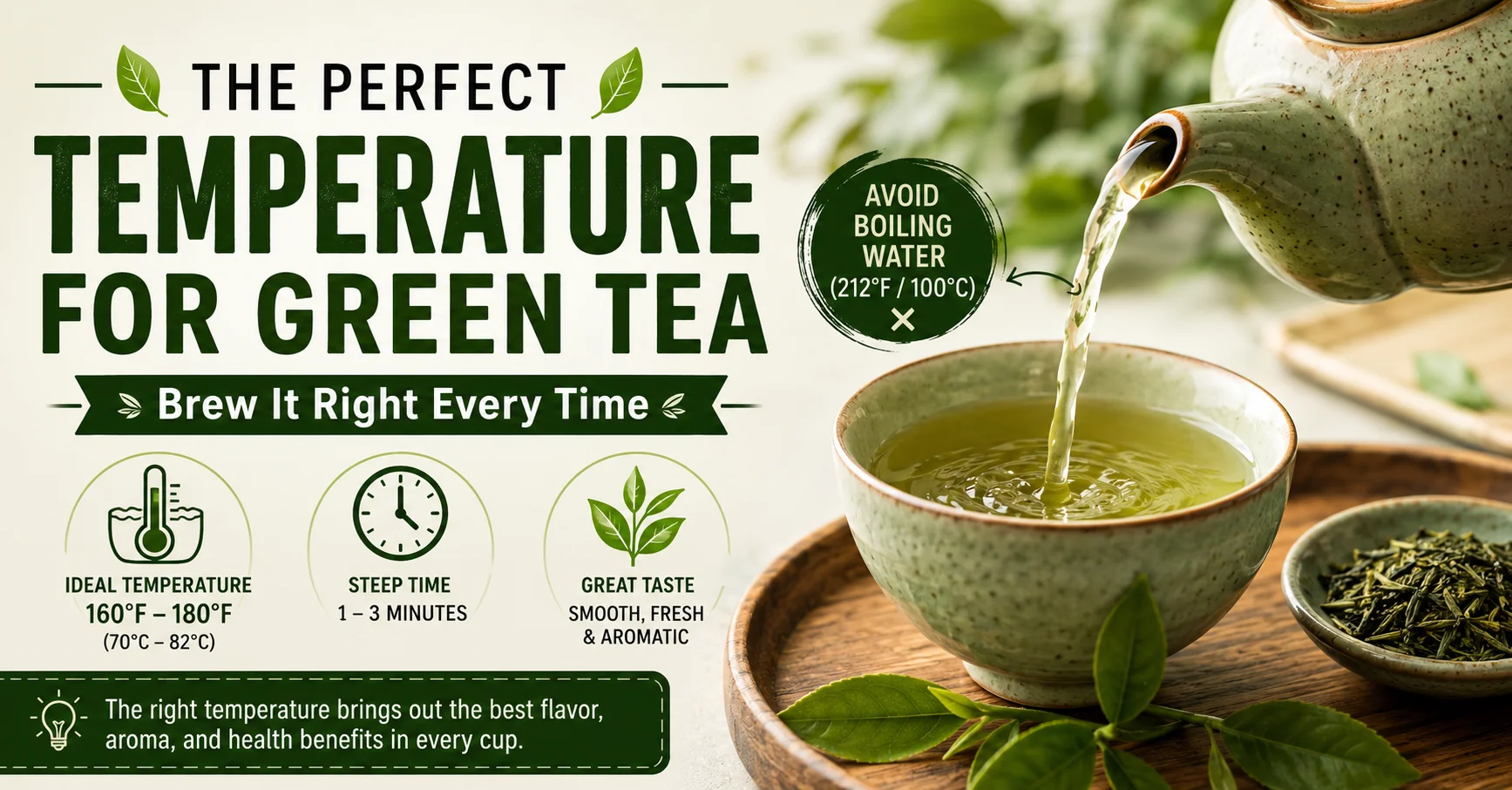
160°F to 180°F (70°C to 82°C)
This range works for most varieties of green tea. However, the exact temperature can vary depending on the type of tea leaves you are using.
Here is a quick breakdown:
| Green Tea Type | Ideal Temperature |
|---|---|
| Japanese Green Tea | 160°F–170°F |
| Sencha | 165°F–175°F |
| Gyokuro | 140°F–160°F |
| Matcha | 175°F |
| Chinese Green Tea | 170°F–180°F |
| Jasmine Green Tea | 175°F–180°F |
Using the proper temperature preserves the tea’s delicate flavors and prevents bitterness.
Why Boiling Water Is Bad For Green Tea
Many people assume all tea should be brewed with boiling water. While that works well for black tea, it is not suitable for green tea.
Boiling water reaches:
100∘C=212∘F
This temperature is simply too high for green tea leaves.
When boiling water touches delicate green tea leaves, it can:
- Burn the leaves
- Destroy subtle flavors
- Increase bitterness
- Create a harsh aftertaste
- Reduce the tea’s natural sweetness
Instead of tasting fresh and smooth, the tea becomes overly strong and unpleasant.
How To Measure Green Tea Temperature
You do not need expensive equipment to brew green tea correctly. There are several easy ways to get the temperature right.
Use a Temperature-Controlled Kettle
This is the easiest and most accurate method. Modern electric kettles often allow you to select exact temperatures for different teas.
For example:
- 160°F for delicate Japanese teas
- 175°F for standard green tea
- 180°F for stronger green tea blends
This method removes guesswork and produces consistent results.
Let Boiled Water Cool Down
If you do not have a temperature-controlled kettle, simply boil water and let it sit before pouring.
Here is a simple guide:
| Cooling Time | Approximate Temperature |
|---|---|
| 1 minute | 195°F |
| 2 minutes | 185°F |
| 3 minutes | 175°F |
| 5 minutes | 160°F |
This traditional method works surprisingly well for everyday tea brewing.
Use a Kitchen Thermometer
A basic kitchen thermometer can help you learn the ideal temperatures until you become comfortable estimating them naturally.
Best Brewing Temperature For Popular Green Teas
Different green teas respond differently to heat. Understanding these differences can improve your brewing results significantly.
Sencha
Sencha is one of the most common Japanese green teas. It has a grassy, fresh flavor that becomes bitter when overheated.
Ideal Temperature
- 165°F to 175°F
Brewing Time
- 1 to 2 minutes
Too much heat can make Sencha taste sharp and unpleasant.
Gyokuro
Gyokuro is a premium shaded Japanese green tea known for its sweetness and umami flavor.
Ideal Temperature
- 140°F to 160°F
Brewing Time
- 2 minutes
This tea requires lower temperatures to maintain its delicate sweetness.
Matcha
Matcha is powdered green tea whisked directly into water rather than steeped.
Ideal Temperature
- Around 175°F
Why It Matters
Water that is too hot can make matcha taste overly bitter and flat.
Dragon Well (Longjing)
This famous Chinese green tea has nutty and chestnut-like flavors.
Ideal Temperature
- 175°F to 180°F
Brewing Time
- 2 to 3 minutes
This slightly higher temperature helps release its rich aroma.
Jasmine Green Tea
Jasmine green tea combines green tea leaves with jasmine flowers.
Ideal Temperature
- 175°F to 180°F
Brewing Time
- 2 to 3 minutes
The right temperature keeps the floral notes balanced and smooth.
How Brewing Time Affects Flavor
Temperature and steeping time work together. Even if the temperature is perfect, steeping too long can still make green tea bitter.
General steeping guidelines:
| Tea Type | Steeping Time |
|---|---|
| Delicate Japanese Tea | 1–2 minutes |
| Chinese Green Tea | 2–3 minutes |
| Matcha | No steeping required |
| Jasmine Green Tea | 2–3 minutes |
If the tea tastes bitter:
- Lower the temperature slightly
- Reduce steeping time
- Use fewer tea leaves
Signs Your Green Tea Is Brewed Correctly
A properly brewed cup of green tea has several clear characteristics.
Color
The tea should appear light green, golden, or pale yellow depending on the variety.
Aroma
Fresh, grassy, floral, or slightly sweet scents should be noticeable.
Taste
Smooth and refreshing with minimal bitterness.
Aftertaste
Clean and pleasant without dryness.
If your tea tastes overly bitter, strong, or sour, the water was likely too hot or the tea steeped too long.
Common Green Tea Brewing Mistakes
Even tea lovers sometimes make simple brewing mistakes. Avoiding these errors can dramatically improve your tea.
Using Boiling Water
This is the most common mistake and the biggest reason green tea tastes bitter.
Steeping Too Long
Leaving tea bags or leaves in the water for too long releases excessive tannins.
Using Too Many Tea Leaves
More leaves do not always mean better flavor. Too much tea can create an overpowering cup.
Poor Water Quality
Water affects taste more than many people realize. Filtered water often produces cleaner, smoother tea.
Reusing Old Tea Leaves Improperly
Some green teas can be steeped multiple times, but old leaves left sitting too long lose freshness.
Does Temperature Affect Green Tea Health Benefits?
Yes, temperature can influence some of the beneficial compounds in green tea.
Green tea contains antioxidants called catechins, especially EGCG. Extremely hot water may reduce delicate flavor compounds, though antioxidants are still present.
Moderate brewing temperatures help preserve:
- Amino acids
- Natural sweetness
- Aroma compounds
- Smooth texture
Brewing correctly also makes green tea easier and more enjoyable to drink regularly.
Hot Brew vs Cold Brew Green Tea
Cold brewing is another popular method for making green tea.
Hot Brew Green Tea
- Faster preparation
- Stronger flavor
- More aromatic
- Traditional brewing style
Cold Brew Green Tea
- Less bitterness
- Smoother taste
- Naturally sweeter
- Lower caffeine extraction
For cold brewing:
- Use cold water
- Refrigerate for 6–8 hours
- Strain and enjoy
Cold brew green tea is excellent during warm weather or for people sensitive to bitterness.
Tips For Brewing Better Green Tea Every Time
Small improvements can make a huge difference in your final cup.
Preheat Your Cup
Warm cups help maintain consistent brewing temperature.
Use Fresh Tea Leaves
Fresh tea produces brighter flavors and better aroma.
Measure Properly
Use about one teaspoon of loose tea per cup.
Avoid Overcrowding Leaves
Tea leaves need room to expand fully.
Experiment Slightly
Different brands and tea harvests may taste better with small temperature adjustments.
Loose Leaf vs Tea Bags
Loose leaf green tea generally provides better flavor because the leaves are less broken and have more room to expand.
Loose Leaf Benefits
- Richer flavor
- Better aroma
- Multiple steepings possible
Tea Bag Benefits
- Convenience
- Faster brewing
- Easy cleanup
No matter which form you use, temperature still plays a major role in the final taste.
How Tea Culture Values Brewing Temperature
Tea culture around the world places strong emphasis on proper brewing techniques.
In Japan, tea preparation is often treated as an art form. Water temperature, timing, and pouring technique are all carefully controlled.
Chinese tea traditions also focus heavily on balancing flavor through precise brewing temperatures.
This attention to detail exists for a reason. Small changes in heat can completely transform the tea-drinking experience.
Can You Re-Steep Green Tea?
Yes, many high-quality green teas can be steeped multiple times.
In fact, some tea lovers prefer the second steep because it can taste smoother and more balanced.
Re-Steeping Tips
- Increase brewing time slightly with each steep
- Maintain proper temperature
- Do not let leaves sit for hours between steeps
Most quality green teas can handle:
- 2 to 4 infusions
- Sometimes more for premium varieties
Choosing The Right Green Tea For Beginners
If you are new to green tea, start with teas that are naturally forgiving and smooth.
Good beginner options include:
- Sencha
- Jasmine green tea
- Dragon Well
- Genmaicha
These teas tend to taste pleasant even if your brewing technique is not perfect.
Conclusion
Understanding the perfect temperature for green tea is one of the easiest ways to improve your tea experience. A few degrees can mean the difference between a smooth, refreshing cup and one that tastes bitter or burnt.
For most green teas, the ideal range is between 160°F and 180°F. Delicate teas prefer lower temperatures, while stronger varieties can handle slightly more heat. Avoid boiling water whenever possible, pay attention to steeping time, and use fresh tea for the best results.
Once you begin brewing green tea correctly, you will notice richer flavors, softer aromas, and a far more enjoyable cup every time.
FAQs
What is the best temperature for green tea?
The best temperature for green tea is usually between 160°F and 180°F, depending on the specific tea variety.
Why does my green tea taste bitter?
Green tea often becomes bitter when brewed with water that is too hot or when steeped for too long.
Can I use boiling water for green tea?
Boiling water is generally too hot for green tea because it can burn the leaves and create a harsh flavor.
How long should green tea steep?
Most green teas should steep for about 1 to 3 minutes for balanced flavor and aroma.
Is loose leaf green tea better than tea bags?
Loose leaf green tea usually offers better flavor and aroma because the leaves are less processed and have more room to expand during brewing.
ALSO READ: Brew Better Every Day With A Tea Mug Steeper

I’m an author and journalist specializing in food and cooking. Caffeine Basics is my ninth book. I’ve written about the U.S. wine industry, international foods, shrinking your “cookprint,” and cooking with kids. Great Bar Food at Home was a James Beard Award finalist, and Cooking Green: Reducing Your Carbon Footprint in the Kitchen won a Green Book Award. Publishers include John Wiley & Sons, ClarksonPotter, Macmillan and others.