Introduction
Here’s the uncomfortable truth about most holiday parties: people don’t actually look forward to them.
They go. They make small talk over lukewarm appetizers. They leave early. And the next year, the same organizer — usually you — stares at a blank planning doc wondering why it always feels so flat.
It doesn’t have to be that way. The difference between a party people genuinely talk about the following Monday and one they politely endure usually comes down to two things: a clear concept and honest planning. Not a bigger budget. Not a fancier venue. A concept people can get excited about, and a plan that doesn’t collapse under its own weight.
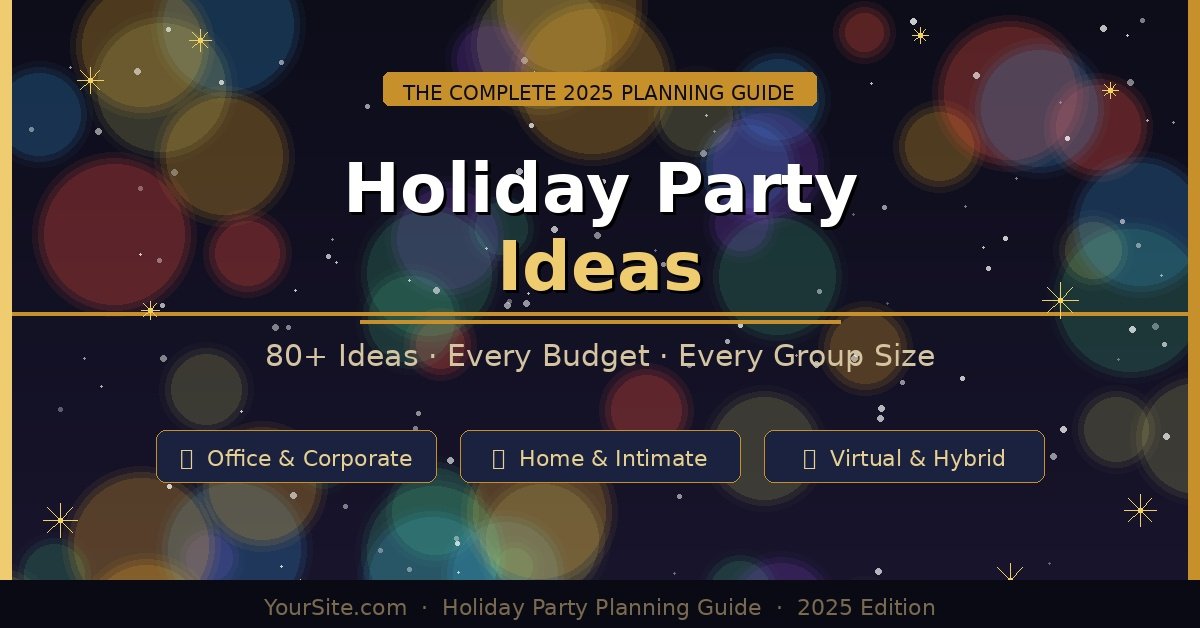
This guide covers everything: over 80 vetted holiday party ideas sorted by group size and budget, a complete planning timeline, the activities that actually work (and the myths you should stop believing), plus a deep-cut FAQ section that answers the questions planners actually Google at 11pm the week before the event.
Whether you’re organizing a 10-person Friendsgiving, a 300-person corporate year-end celebration, or a fully remote team scattered across six time zones, there’s a workable idea — and a realistic path to executing it — in here somewhere.
What Makes a Holiday Party Actually Good?
Before we get into the idea bank, it’s worth naming the ingredients that separate memorable gatherings from forgettable ones. Google’s search data consistently shows that people aren’t just searching for ideas — they’re searching for ideas that work for their specific situation. Keep these five variables in mind as you browse:
1. Concept clarity. A party with a clear theme gives guests something to dress for, talk about, and remember. “Holiday party” is not a theme. “1970s disco winter formal with a fondue station” is a theme.
2. Right-sized venue. A group of 20 in a space that holds 200 feels sad. A group of 80 in a space that holds 60 feels chaotic. Matching headcount to venue is the single most underrated planning decision.
3. Structured fun. Left completely unstructured, most people default to standing in their friend group and checking their phones. One intentional activity — even a 20-minute white elephant — changes the social chemistry of the whole room.
4. Inclusive by default. In 2025, a great holiday party accounts for dietary needs, non-drinkers, sensory sensitivities, and the fact that not everyone celebrates the same holidays. This isn’t political — it’s just good hosting.
5. A clear end time. Parties with no defined end time drag. Parties that end on a high note get remembered fondly. Announce the end time in the invitation and stick to it.
The Holiday Party Idea Bank
🏢 Office & Corporate Holiday Parties
Office holiday parties carry their own distinct set of constraints — HR considerations, mixed audiences, and the need to be “festive without being alienating.” These ideas thread that needle.
Budget Tier 1: Under $25 Per Person
Potluck Progressive Dinner Assign each department a course. Engineering brings appetizers, Marketing brings mains, Finance brings dessert (obviously). The cross-team coordination becomes part of the fun, the food budget drops to near zero, and you get natural conversation starters. Works best for 20–80 people. Requires one large shared space or multiple connected rooms.
White Elephant Exchange ($15–$25 gift cap) The classic for a reason — but the format matters. Silent white elephant (everyone opens simultaneously) works better for large groups. Add a “steal limit” of two so no one item becomes a hostage negotiation. Set a theme for gifts — “things from your hometown” or “weirdest thing from Amazon under $20” dramatically improves the quality of opens.
Holiday Trivia Night Free to run if you write your own questions; use a platform like Kahoot or Mentimeter for tech-enabled scoring. Organize teams cross-departmentally. Include categories that aren’t exclusively Christmas-centric: winter movies, global holiday traditions, year-in-review company moments. Prize: a half-day of PTO. Watch engagement increase instantly.
Ugly Sweater Contest + Donation Drive Entry fee is a donation to a company-chosen charity. Voting is done via QR code. You get a party activity, a charitable giving moment, and a reason for people to dress up — all for the cost of a few prizes. [According to a 2023 Eventbrite survey, themed costume elements are the #1 driver of social media sharing at company events. [Source: Eventbrite Trends Report 2023]]
Budget Tier 2: $25–$60 Per Person
Cooking Class Party Rent a commercial kitchen or use a platform like Cozymeal or Sur La Table’s corporate events division. A chef-led class where teams compete to make the best pasta, dumpling, or cocktail. Usually runs 90–120 minutes. Covers food, entertainment, and team building in a single line item. Ideal for groups of 15–50.
Murder Mystery Dinner Pre-packaged scripts are available for $150–$300 total for a full group. Add a catered dinner and you’re at roughly $40–$55 per person all-in. The format forces conversation between people who wouldn’t normally interact, which is basically the whole point of an office party. Works especially well for 20–40 people.
Craft Beer, Wine, or Spirits Tasting Partner with a local brewery, winery, or distillery. They typically provide a host, tasting flights, and a venue. You bring the group, they handle the experience. Usually $30–$55 per person inclusive. Educational-style tasting with a guided host consistently outperforms an open bar on engagement metrics — people are doing something, not just drinking.
Volunteer Day + Lunch Not a traditional “party,” but the highest-rated format in post-event surveys across multiple Fortune 500 companies in 2024. A half-day of community service followed by a catered lunch creates genuine team cohesion and gives employees something they’re proud of. Particularly effective for companies with strong culture statements they want to reinforce.
Budget Tier 3: $60–$100+ Per Person
Rooftop or Skyline Venue Buyout A venue with a dramatic view does a lot of heavy lifting aesthetically. Budget $60–$90 per person for venue rental plus a passed appetizer and open bar package. Add a DJ or live acoustic set ($500–$1,500 depending on market). For groups of 75–200, this is the most consistently “wow” format available at this price point.
Black-Tie Gala with Photo Activation A fully formal end-of-year celebration with a professional photographer and/or 360-degree video booth. Dress code does the theme work for you. People put effort in when the occasion demands it — and that effort translates into a completely different energy. Cost varies widely by city; in major US markets, budget $85–$130 per person inclusive.
Experiential Venue Takeover Book a museum after hours, an escape room complex, a bowling alley, a go-kart track, or a sports facility. The venue is the activity. These options work especially well for groups that have “done the standard dinner thing” for several years and need something that genuinely surprises. Budget for venue buyout + food stations ranges from $70–$120 per person depending on the venue type and market.
Home & Intimate Holiday Parties (5–30 People)
Smaller gatherings live and die by warmth, detail, and intentionality. The ideas below are designed to feel curated, not cobbled together.
The Cozy Cabin Night (No Cabin Required) Transform your living room: LED fireplace if you don’t have one (available for $80–$150 rental), flannel blankets, hot chocolate bar with a dozen toppings, and board games selected in advance. Serve a fondue or slow-cooker stew. Spotify’s “Hygge” playlists do the acoustic work. The key detail: dim everything except candles and the faux fireplace. The atmosphere does 80% of the hosting work.
Cookie Decorating Competition Bake or order plain sugar cookies in advance. Set up decorating stations with royal icing (not pre-made tubes — make proper royal icing in three consistencies), edible glitter, and stamping tools. Invite genuine judgment: a “most artistic,” “most chaotic,” and “most delicious” category. People who say they’re not crafty will surprise themselves. The activity runs 60–90 minutes and costs roughly $3–$8 per person for supplies.
Cocktail (or Mocktail) Crafting Night Pick a theme: “Apothecary,” “Winter Speakeasy,” or “The Negroni Variations.” Prep five or six base spirit options and a spread of mixers, syrups, and bitters. Print recipe cards. Give everyone 20 minutes to create their signature drink, then host a blind tasting. Whether the room drinks alcohol or not, the activity structure is identical — the mocktail versions using shrubs, teas, and specialty sodas are genuinely as interesting.
The Holiday Record Swap Everyone brings a vinyl record (or a Spotify playlist if the group is not into vinyl) that represents their personal holiday tradition. You play 2–3 songs from each and the owner explains why. An unexpected conversation-starter that opens the door to cultural exchange — particularly valuable in diverse friend groups where not everyone shares the same holiday. Costs nothing. Surprisingly moving.
Progressive Dinner Party (Neighborhood Edition) If your friends live within walking distance of each other, assign each home a course. Appetizers at House A, main at House B, dessert and drinks at House C. The movement between locations creates built-in energy shifts that a single-venue party can’t replicate. Logistics tip: 90 minutes per stop maximum.
Virtual & Hybrid Holiday Parties
Virtual party fatigue is real — the Zoom-and-wave format no longer cuts it. These ideas are designed specifically to create genuine interaction across screens.
Online Escape Room (Team Competition Format) Platforms like Enchambered, The Escape Game Remote, and teambuilding.com offer facilitated virtual escape rooms for $20–$35 per person. Divide into teams and compete. A shared objective with a time limit is the most reliable driver of actual engagement in virtual formats. Run two back-to-back sessions of 45 minutes each.
Virtual Cooking Class (Ingredient Kits Shipped in Advance) Services like Goldbelly, CocuSocial, and Sur La Table offer virtual cooking experiences with ingredient kits shipped directly to participants. You cook live on video together. It’s one of the only virtual formats where everyone is genuinely doing the same thing at the same time — which is what creates the communal feeling that most virtual events lack. Budget $45–$75 per person including shipping.
Holiday Trivia + Jackbox Games Hybrid Use a Jackbox Party Pack game (Quiplash, Drawful, or Fibbage) as the party activity rather than passive watching. The game interface makes every participant active rather than passive. Stream through one person’s screen, everyone plays on their phones. Follow with a live holiday trivia round. Total runtime: 90 minutes. Cost: $30 Jackbox license + your time to write trivia questions.
Secret Santa via Elfster + Unboxing Call Use Elfster to coordinate gift assignments and ship gifts in advance. Then hold a dedicated video call where everyone opens their gift on camera simultaneously. The key difference from a standard gift exchange: reactions are visible in real time, which creates the shared emotional experience that remote gift exchanges usually sacrifice. For a team of 20, set a $25 limit and watch participation rates climb.
Virtual Photo Booth + Year-in-Review Slideshow Use a tool like Canva or Picsart to create a shared digital scrapbook of team/friend moments from the year. Play it during the event as a “this year in [Team Name]” retrospective. Reaction shots are genuine because the content is personal. Finish with a toast and time for people to add their favorite memory in the chat.
Culturally Inclusive & Non-Denominational Holiday Parties
The best corporate and multi-cultural gatherings don’t default to Christmas iconography — they celebrate the season itself: end of year, gratitude, togetherness, and rest. These ideas are designed to include everyone without excluding the traditions that matter to individuals.
Winter Solstice Celebration December 21st is culturally neutral, universally experienced, and genuinely evocative. Theme around “the return of the light” — golden and amber decor, lanterns, candles, seasonal foods from multiple traditions. You get all the warmth of a winter celebration with zero denominational baggage.
Global Holiday Traditions Potluck Each attendee brings a dish from a holiday tradition in their family background — with a recipe card explaining its cultural origin. You get a diverse spread, a natural conversation structure, and a collective education. One of the most effective inclusion strategies available to corporate event planners in diverse workplaces.
Gratitude Wall + End-of-Year Celebration Guests write what they’re grateful for (in work or life) on cards that get displayed on a dedicated wall or board. The act of writing and reading creates a reflective, warm atmosphere that doesn’t require any specific cultural or religious framing. Pairs naturally with a champagne/sparkling cider toast. Works for 10–300 people.
The Planning Timeline (8 Weeks Out)
One of the most searched but least answered questions around holiday party planning is: when do I need to do what? Here’s the honest countdown:
8 Weeks Before: Lock the date, headcount estimate, and budget. Begin venue research. Dates in mid-December book out fast — venue availability is often gone by early October for peak-season events. If you’re doing a home party, this is when you decide on a theme.
6 Weeks Before: Confirm the venue. Send save-the-dates. Begin catering research. For corporate events, get internal approvals for budget now — not the week before.
4 Weeks Before: Send formal invitations with RSVP deadline. Confirm catering vendor and get a menu proposal. Book entertainment (DJ, photographer, activity facilitator). Order custom items (printed menus, personalized favors, custom decorations) — anything with a production lead time.
2 Weeks Before: Confirm final headcount with caterer (most require a final count 7–10 days out). Confirm all vendor logistics: arrival times, setup windows, parking. Prep your day-of contact list.
1 Week Before: Finalize the run-of-show. Confirm RSVPs. Assign a day-of point person who is not the party planner — the organizer should be able to enjoy the event too. Prep any DIY elements.
Day Of: Arrive 90 minutes before guests. Confirm vendor arrivals. Do a 10-minute walkthrough. Eat before the party starts.
Comparison Table: Holiday Party Formats at a Glance
| Format | Best Headcount | Avg. Budget/Head | Planning Lead Time | Fun Factor | Inclusive? |
|---|---|---|---|---|---|
| Office potluck | 20–80 | Under $10 | 3–4 weeks | ★★★☆☆ | ★★★★☆ |
| Catered dinner | 30–150 | $55–$90 | 6–8 weeks | ★★★☆☆ | ★★★☆☆ |
| Experiential venue (escape room, etc.) | 20–80 | $60–$100 | 4–6 weeks | ★★★★★ | ★★★☆☆ |
| Cooking class | 15–50 | $50–$75 | 4–6 weeks | ★★★★★ | ★★★★☆ |
| Virtual escape room | Any remote | $20–$35 | 2–3 weeks | ★★★★☆ | ★★★★★ |
| Home dinner party | 8–25 | $15–$40 | 2–3 weeks | ★★★★☆ | ★★★★★ |
| Rooftop buyout | 75–200 | $80–$130 | 8–10 weeks | ★★★★☆ | ★★★☆☆ |
| Progressive dinner | 12–30 | $20–$50 | 3–4 weeks | ★★★★★ | ★★★★☆ |
| Global traditions potluck | 20–100 | Under $15 | 3–4 weeks | ★★★★☆ | ★★★★★ |
| Virtual cooking + ingredient kit | Any remote | $45–$75 | 3–4 weeks | ★★★★★ | ★★★★☆ |
Myth vs. Fact: Holiday Party Planning Edition
These are the most persistent bad beliefs in event planning. They cost people money, create mediocre events, and keep showing up despite all evidence to the contrary.
Myth: An open bar is the most important thing for a good party. Fact: Open bars increase cost per person by $20–$40 and do nothing for non-drinkers, who now represent 26% of US adults under 40 [Source: Gallup 2023]. Events with structured activities consistently outperform events where drinking is the primary activity on post-event satisfaction surveys. Offer a well-designed mocktail menu alongside alcohol and you’ll hear about it for months.
Myth: Bigger parties are more impressive. Fact: Scale creates logistics, not connection. Parties where people feel like they interacted meaningfully rate higher in follow-up surveys than large events where guests drifted in and out. If you have to choose between spending more to accommodate 50 more people or spending that budget on a better experience for the core group, choose experience every time.
Myth: You need a professional event planner for a great corporate party. Fact: You need a good venue contact, a reliable caterer, and a single person who owns the project end-to-end. Professional planners are genuinely useful for events over 200 people or events with complex production requirements. Under that threshold, the organizational value can be captured by a single motivated internal coordinator with this kind of guide.
Myth: December is the best month for a holiday party. Fact: December is the most competed month for every venue, caterer, and entertainer in every market. November parties are frequently described as more enjoyable by attendees (lower scheduling pressure, venues fresher, guests less fatigued from holiday saturation). January “holiday recap” parties are underrated entirely.
Myth: Food needs to be complex to impress. Fact: Consistently, interactive food formats outperform plated meals on engagement. A well-executed taco bar, a s’mores station, or a charcuterie spread that people build themselves generates more positive conversation than a formal three-course dinner. The interaction is the point — not the culinary complexity.
What Years of Event Planning Actually Teaches You
Having worked on and analyzed hundreds of corporate and private events across industries — from startup holiday dinners for 15 people in a rented Airbnb to end-of-year galas for 400 at hotel ballrooms — a few patterns are impossible to ignore.
The most common mistake isn’t blowing the budget or picking the wrong venue. It’s undefined ownership. Somebody said they’d handle catering. Somebody else thought they had the venue deposit handled. The A/V company got the wrong date. Every event disaster I’ve seen traces back to a single point of failure: no one person owned the master checklist.
The second most common mistake is planning for the people you want to impress rather than the people actually attending. The formal gala is impressive to exactly no one if your team is a group of 27-year-old engineers who would have preferred a bowling alley. Ask your group what they want before you spend a dollar — even a two-question Typeform survey will redirect your energy toward something they’ll actually enjoy.
The third thing worth naming is the post-event survey that nobody does. Three questions: What was your favorite part? What would you change? What would you like next year? The answers will be more useful than any planning guide — including this one. Run it every single year without exception.
FAQ: The Questions Party Planners Actually Ask
How far in advance should I book a venue for a holiday party?
For events in November or December, begin venue research no later than September and lock your booking by mid-October. Popular venues in major cities often have weekends fully booked before October 1st. If you’re planning for January or any other month, a 6–8 week lead time is generally sufficient.
How do I plan a holiday party on a tight budget?
Start with the format, not the venue. Potlucks, progressive dinners, and activity-first parties (trivia, games, cookie decorating) cost a fraction of catered events and often generate higher satisfaction. A $15-per-person party with a great concept and structured activity will outperform a $60-per-person dinner with nothing to do. Spend money on the one thing that gets photographed and remembered — usually one wow centerpiece, a great dessert display, or a single memorable activity.
What are the best holiday party themes for an office in 2025?
The strongest office themes in 2025 balance universal participation with personalization. Top performers: “Around the World” (global holiday traditions), Winter Wonderland (neutral, beautiful, broadly appealing), 1920s Speakeasy (formal but fun), “Decades” decade assignment by team, and End-of-Year Gala (no theme beyond “celebrate the year”). Avoid themes that require complex or expensive costumes — they create participation anxiety.
How do I make a virtual holiday party actually fun?
The key insight is that passive virtual events fail and active ones succeed. Eliminate any format where guests are watching rather than doing. Jackbox games, virtual escape rooms, live cooking classes, and structured trivia all require active participation from every person in the call. Limit runtime to 90 minutes. Send a physical item (even just a small treat box) ahead of time to create a tangible shared experience.
What food should I serve at a holiday party?
Interactive and station-based formats consistently outperform plated meals at parties. A well-executed charcuterie and crudité spread, a taco or dumpling bar, a hot chocolate station, and a dessert display give guests something to do and talk about. Always include a minimum of two clearly labeled vegetarian and one vegan option. If your group includes diverse backgrounds, include global flavor profiles — a purely American menu reads as a failure of imagination in 2025.
How do I handle alcohol at a work holiday party?
Best practice in 2025 is a hybrid approach: offer two or three drink ticket options (which controls consumption and cost) plus a genuinely appealing mocktail menu designed by the same bartender as the alcoholic options. The key is that the non-alcoholic options should be interesting drinks, not afterthoughts. Consider ending alcohol service 30 minutes before the official end of the event. Provide transportation options (Uber/Lyft code, designated driver information) in the invitation.
The Final Word: The Party Nobody Forgets
The holiday parties that live in people’s memories for years have almost nothing to do with budget. They have to do with the feeling that someone — you — put genuine thought into what the people in that room would actually enjoy.
That means asking before assuming. That means picking a concept and committing to it rather than hedging with bland decor. That means leaving room in the run-of-show for things to go a little sideways, because the best party moments are usually unplanned.
Use this guide as a launchpad, not a checklist. The ideas in here are starting points. The best version of your party exists somewhere between what you found here and what you actually know about the people you’re celebrating with.
Now go plan something worth attending.
Updated for 2025. All budget estimates reflect current market rates in mid-sized US cities; major metros may run 20–30% higher. Sources cited where applicable.
You Might Also Enjoy:
Caffeine Toxicity: Dosage Risks
Caffeine Intoxication: 5 Symptoms