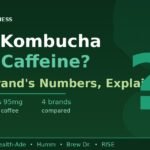
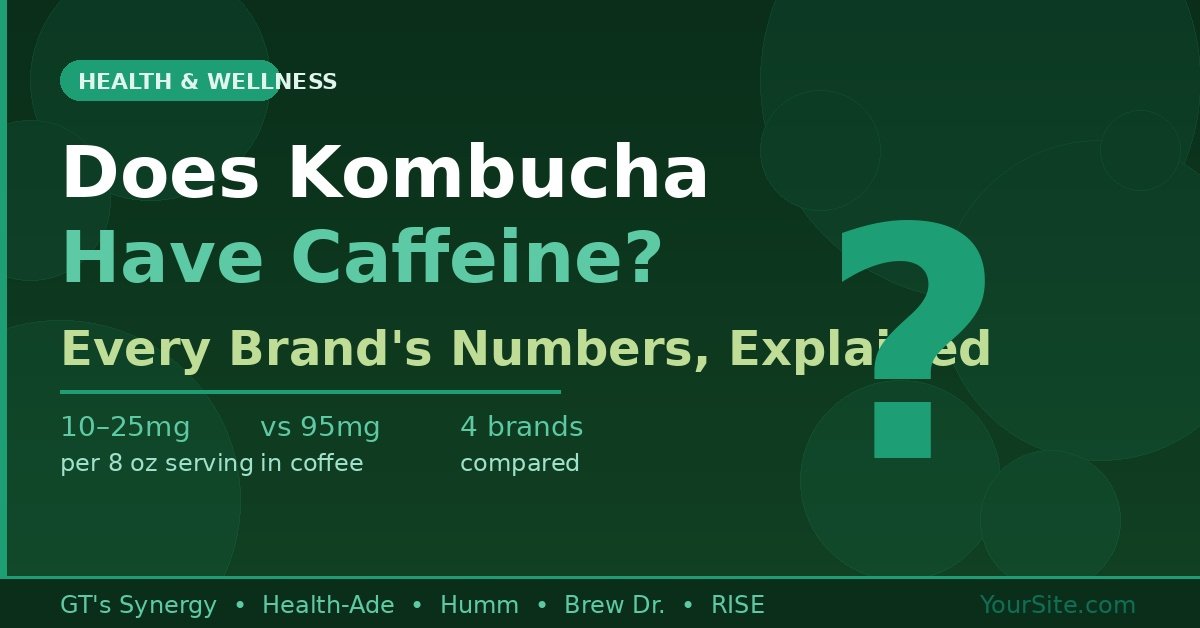
If you’re switching from coffee, managing anxiety, or just watching your caffeine intake, the question is completely fair: does that bottle of kombucha actually have caffeine in it? The short answer is yes — but probably a lot less than you’re imagining.
Kombucha is brewed from tea, and tea contains caffeine. So there’s always going to be some caffeine in the finished drink. The real question is how much, whether it matters for your lifestyle, and how your favorite brand stacks up. That’s exactly what this guide covers — specific numbers, brand breakdowns, what fermentation does to caffeine levels, and who genuinely needs to be careful.
Why Kombucha Has Caffeine in the First Place
To understand kombucha’s caffeine content, you have to understand what kombucha actually is. It starts as sweetened tea — almost always black tea, sometimes green — and then a SCOBY (symbiotic culture of bacteria and yeast) is added to ferment it. That fermentation process is what creates the tangy flavor, the probiotics, the organic acids, and the light carbonation.
The tea doesn’t disappear during fermentation. Its core compounds, including caffeine, carry through into the final drink. What does happen during fermentation is that the SCOBY’s microorganisms consume a lot of the sugar — but caffeine? Fermentation doesn’t break it down significantly. Most of what starts in the tea ends up in your bottle.
The brewer controls how long the tea is steeped and how much tea is used. Shorter steep times mean less caffeine going in, which means less caffeine in the finished product. This is why caffeine content varies between brands.
How Much Caffeine Does Kombucha Have?
A typical 8-ounce serving of commercially brewed kombucha contains approximately 10–25 mg of caffeine. A full 16-ounce bottle contains roughly 20–50 mg.
To put that in context:
- Drip coffee (8 oz): ~95 mg
- Black tea (8 oz): ~45–70 mg
- Green tea (8 oz): ~25–35 mg
- Cola soda (8 oz): ~25–35 mg
- Typical kombucha (8 oz): ~10–25 mg
Kombucha contains roughly one-quarter to one-half the caffeine of the tea it’s brewed from.
Does Synergy Kombucha Have Caffeine?
Yes. Synergy is GT’s Kombucha’s flagship line, brewed from black tea. A full 16 oz bottle of Synergy contains approximately 28 mg of caffeine, or about 14 mg per 8-ounce serving. That’s mild — roughly comparable to a weak cup of green tea.
Does Health-Ade Kombucha Have Caffeine?
Yes. Health-Ade brews with a blend of black and green teas, putting their caffeine content at roughly 10–15 mg per 8 oz. A full 16 oz bottle puts you around 20–30 mg total.
Does Humm Kombucha Have Caffeine?
Yes, though Humm sits at the lower end of the spectrum — around 10 mg per 8 oz. It’s one of the more caffeine-gentle options on mainstream shelves.
Brand-by-Brand Caffeine Breakdown
GT’s Original Kombucha — 8 fl oz — ~14 mg — Brewed from black tea
GT’s Synergy Kombucha — 16 fl oz bottle — ~28 mg — ~14 mg per 8 oz
Health-Ade Kombucha — 8 fl oz — ~10–15 mg — Black and green tea blend
Humm Kombucha — 8 fl oz — ~10 mg — Lower end, lighter caffeine
Brew Dr. Kombucha — 8 fl oz — ~15 mg — Varies by flavor
RISE Kombucha — 8 fl oz — ~12–15 mg — Widely third-party tested
Does Fermentation Reduce Caffeine?
This is a common misconception. Research suggests fermentation has minimal effect on caffeine content. The lower caffeine in kombucha compared to plain tea is primarily due to brewing practices — using less tea, shorter steep times, or diluting with water — not because the SCOBY destroys caffeine.
What fermentation does preserve is L-theanine, an amino acid in tea that promotes calm alertness and softens caffeine’s stimulating edge. This may explain why many people feel less jittery from kombucha caffeine than from an equivalent dose of coffee.
Who Should Pay Attention to Kombucha’s Caffeine
Pregnant individuals: Major health bodies recommend limiting caffeine to under 200 mg/day during pregnancy. Kombucha’s caffeine alone won’t push you there, but kombucha is also an unpasteurized product — worth discussing with your doctor separately.
Caffeine-sensitive individuals: Some people metabolize caffeine slowly. Even 15 mg can disrupt sleep if consumed in the evening. Pay attention to your own response.
Those managing anxiety: Caffeine can worsen anxiety in some people. Kombucha’s dose is low, but worth tracking if you’re actively cutting caffeine.
Is There Caffeine-Free Kombucha?
Yes, but it’s rare. Truly caffeine-free kombucha requires brewing from a caffeine-free base like rooibos, hibiscus, or ginger root. Some specialty craft producers make these. The vast majority of kombucha on store shelves is tea-based and will always contain at least a small amount of caffeine.
If zero caffeine is a hard requirement, look for products explicitly labeled caffeine-free, or consider water kefir — a probiotic drink made without tea.
FAQ
Does all kombucha have caffeine?
Almost all commercially sold kombucha is brewed from tea, so yes — it contains some caffeine, typically 10–25 mg per 8 oz. The only exceptions are kombuchas brewed from caffeine-free herbal bases, which are rare in mainstream retail.
How much caffeine does GT’s kombucha have?
GT’s Original and Synergy both contain approximately 14 mg per 8 oz serving. A standard 16 oz bottle of Synergy contains roughly 28 mg total.
Does kombucha have as much caffeine as coffee?
No. Coffee has around 95 mg per 8 oz. Kombucha has 10–25 mg — roughly one-quarter to one-sixth as much.
Can I drink kombucha if I’m trying to cut out caffeine?
It depends on your sensitivity. If you’re avoiding coffee-level doses, kombucha is a reasonable middle ground. If even small amounts affect you, be cautious with afternoon or evening servings.
Does Humm kombucha have caffeine?
Yes, around 10 mg per 8 oz — one of the lower amounts among mainstream brands.
The Bottom Line
Kombucha contains caffeine because it’s made from tea. But the dose is modest — most brands land between 10 and 25 mg per 8 oz, putting a full bottle in the same neighborhood as a weak green tea, not a double espresso.
GT’s Synergy sits around 14 mg per 8 oz. Health-Ade runs 10–15 mg. Humm comes in around 10 mg. None of these will meaningfully affect a non-sensitive adult.
If you’re managing a condition where caffeine matters, contact the brand directly and ask whether they conduct third-party caffeine testing — transparency varies, but the better brands will tell you exactly what’s in each flavor.