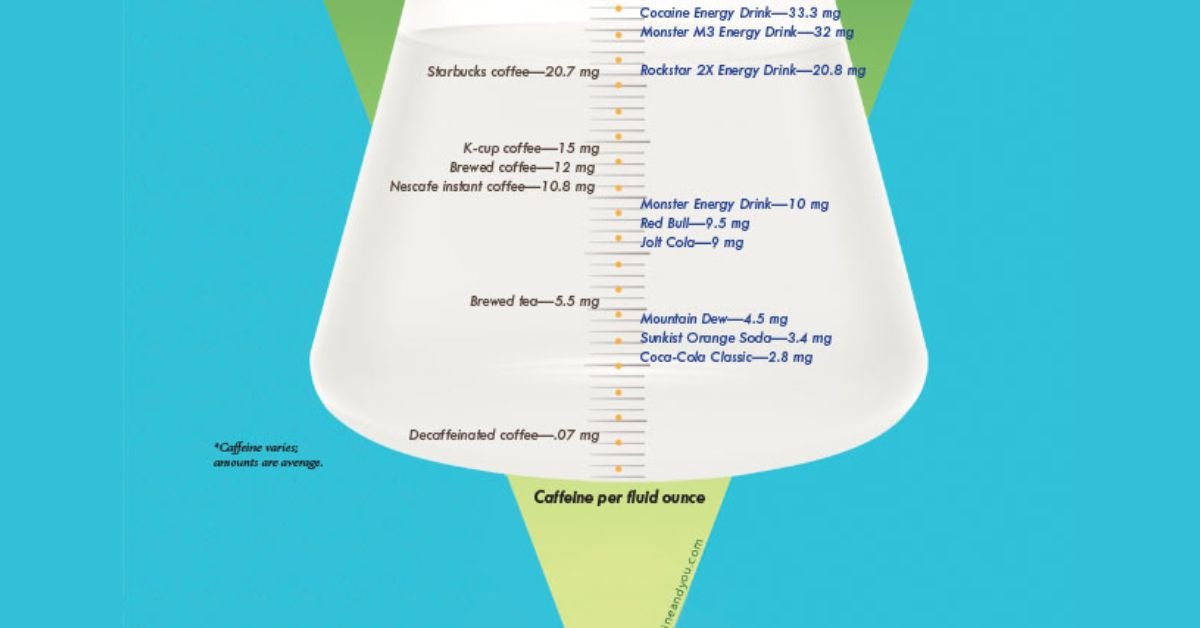
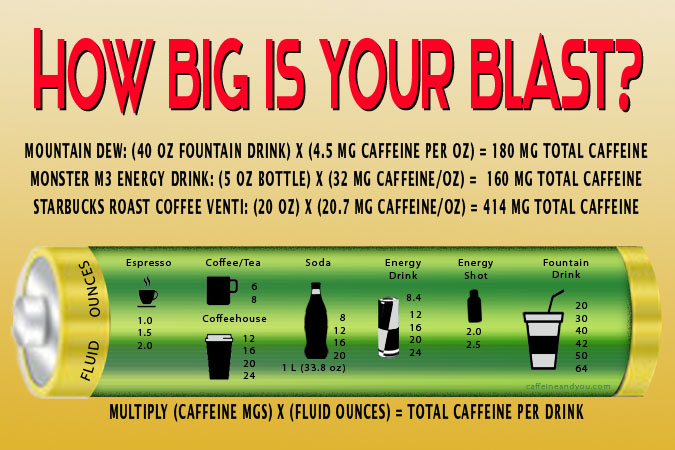
The infographic above shows caffeine concentration: it reflects the amount of caffeine per ounce – you can use these numbers to determine how much caffeine you’re consuming. Simply multiply the milligrams per ounce (in the graphic) by the ounces in a beverage.
*Note: Caffeine in coffee and tea varies; amounts listed are average.
Examples:
Mountain Dew: (40 oz fountain drink) x (4.5 mg caffeine per oz) = 180 mg total caffeine
Monster M3 Energy Drink: (5 oz bottle) x (32 mg caffeine/oz) = 160 mg total caffeine
Starbucks Roast Coffee Venti: (20 oz) x (20.7 mg caffeine/oz) = 414 mg total caffeine
Caffeine Basics: Table of Contents

I’m an author and journalist specializing in food and cooking. Caffeine Basics is my ninth book. I’ve written about the U.S. wine industry, international foods, shrinking your “cookprint,” and cooking with kids. Great Bar Food at Home was a James Beard Award finalist, and Cooking Green: Reducing Your Carbon Footprint in the Kitchen won a Green Book Award. Publishers include John Wiley & Sons, ClarksonPotter, Macmillan and others.