
Coffee is one of the most consumed beverages in the world. Yet most people know only a handful of varieties. Understanding the different categories of coffee helps you make better choices — whether you’re ordering at a café, shopping for beans, or brewing at home.
This guide breaks down every major category of coffee clearly and simply.
Why Coffee Categories Matter
Coffee isn’t just “black” or “with milk.” It’s a layered world of beans, roasts, brewing methods, and drink styles. Each category changes the flavor, strength, and experience entirely.
When you understand coffee categories, you can:
- Order exactly what you want at any café
- Buy the right beans for your brewing method
- Explore new flavors with confidence
The Main Categories of Coffee
1. By Coffee Bean Type
The foundation of every cup of coffee starts with the bean. There are four main species:
Arabica The most popular coffee bean in the world. It has a smooth, slightly sweet flavor with hints of fruit and sugar. Most specialty coffees use Arabica beans. They grow best at high altitudes.
Robusta Stronger, more bitter, and higher in caffeine than Arabica. Robusta is often used in espresso blends and instant coffee because of its bold flavor and thick crema.
Liberica A rare bean with a unique, smoky, and woody taste. It’s mostly grown in the Philippines and West Africa. Not commonly available outside specialty markets.
Excelsa A variety of Liberica. It has a tart, fruity, and complex flavor. Often used in blends to add depth.
2. By Roast Level
Roasting transforms raw green coffee beans into the dark, flavorful beans used for brewing. The roast level dramatically changes the taste.
Light Roast
- Light brown color
- Retains original bean flavors
- Higher acidity, floral or fruity notes
- Higher caffeine than darker roasts
Medium Roast
- Balanced flavor, aroma, and acidity
- Popular in the United States
- Examples: breakfast blend, Colombian roast
Dark Roast
- Bold, smoky, and bitter flavor
- Lower acidity
- Oil appears on the surface of the beans
- Examples: French roast, Italian roast, espresso roast
3. By Brewing Method
How you brew coffee is just as important as what beans you use. Different methods extract flavor differently and produce distinct results.
Espresso Made by forcing hot water through finely ground coffee under high pressure. It’s the base for many popular drinks like lattes, cappuccinos, and Americanos. Espresso is concentrated — small in volume but intense in flavor.
Drip Coffee The most common method in homes and offices. Hot water drips through ground coffee and a filter. It produces a clean, mild cup.
French Press Ground coffee steeps in hot water for several minutes before being pressed. This method produces a full-bodied, rich cup because the oils stay in the coffee.
Pour Over Hot water is poured slowly over coffee grounds in a filter. It gives the brewer precise control and produces a clean, nuanced cup. Popular in specialty cafés.
Cold Brew Coffee grounds steep in cold water for 12–24 hours. The result is smooth, low-acid, and naturally sweet. It’s served cold and can be diluted with water or milk.
Moka Pot A stovetop device that uses steam pressure to brew strong coffee. Common in Italian households. It produces a thick, espresso-like coffee without a machine.
AeroPress A portable brewing tool that combines pressure and immersion. It’s fast, versatile, and produces a clean, smooth cup.
4. By Coffee Drink Style
Once brewed, coffee can be served in many different styles. These are the categories you’ll find on most café menus.
Black Coffee Drinks
- Espresso – A small, concentrated shot of coffee
- Americano – Espresso diluted with hot water
- Long Black – Hot water with espresso poured on top (stronger than Americano)
- Drip Coffee – Standard filtered black coffee
Milk-Based Coffee Drinks
- Latte – Espresso with steamed milk and a thin layer of foam
- Cappuccino – Equal parts espresso, steamed milk, and thick foam
- Flat White – Similar to a latte but with less milk and a stronger coffee flavor
- Macchiato – Espresso with a small amount of foamed milk
- Cortado – Equal parts espresso and warm milk
Cold Coffee Drinks
- Iced Latte – Espresso over ice with cold milk
- Cold Brew – Steeped coffee served cold
- Frappuccino – Blended ice, coffee, and milk (often with syrup)
- Nitro Cold Brew – Cold brew infused with nitrogen for a creamy texture
Specialty Coffee Drinks
- Turkish Coffee – Finely ground coffee boiled in water, served unfiltered
- Vietnamese Iced Coffee – Strong drip coffee with sweetened condensed milk over ice
- Irish Coffee – Hot coffee with Irish whiskey and whipped cream
- Dalgona Coffee – Whipped instant coffee on top of milk
5. By Caffeine Content
Not all coffees have the same caffeine level. This is an important category for people watching their intake.
Regular Coffee Contains caffeine, usually 80–200mg per cup depending on the brewing method and bean type.
Decaf Coffee Has had most of its caffeine removed — typically 97% or more. It still has a small amount, usually 2–15mg per cup.
Half-Caf A blend of regular and decaf coffee. Gives a moderate caffeine boost.
High-Caffeine Coffee Some beans and blends are specifically marketed for very high caffeine content. Cold brew and Robusta-based espressos tend to be naturally stronger.
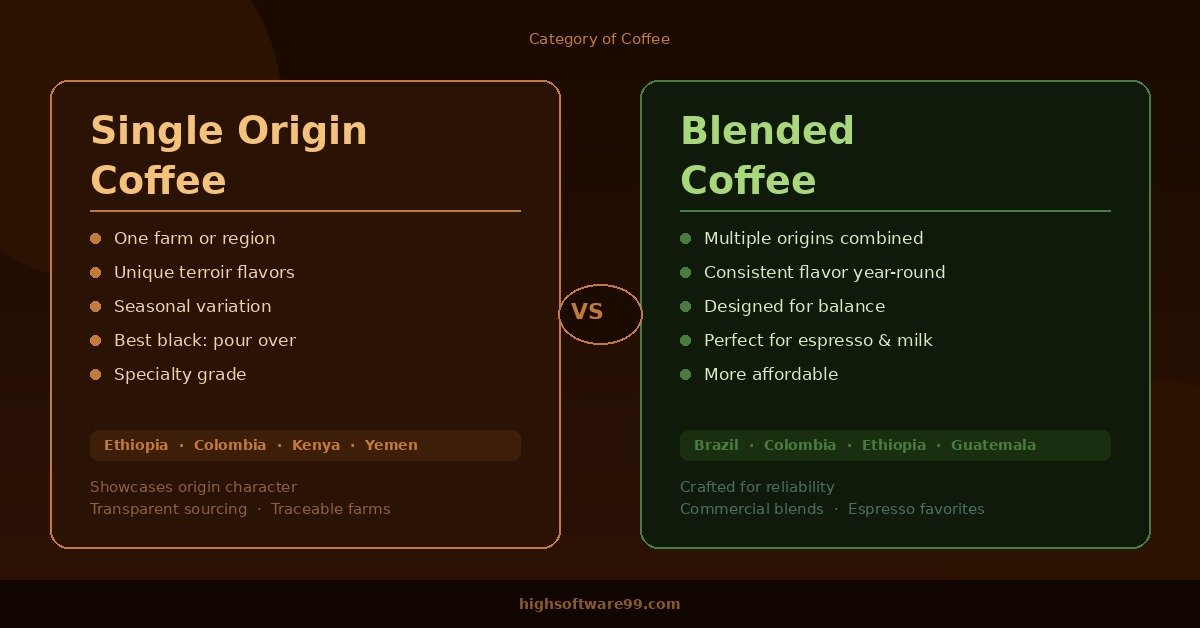
6. By Origin (Single Origin vs. Blends)
Single Origin Coffee Comes from one specific country, region, or farm. It highlights the unique flavors of that location.
Popular origins include:
- Ethiopia – Fruity, floral, berry notes
- Colombia – Balanced, mild, caramel undertones
- Brazil – Nutty, chocolatey, low acidity
- Jamaica (Blue Mountain) – Smooth, mild, premium price
- Yemen – Rich, earthy, wine-like flavor
Blended Coffee Combines beans from multiple origins. Roasters blend to achieve a consistent, balanced flavor profile year-round.
How to Choose the Right Category of Coffee for You
Here’s a simple guide:
| Your Preference | Best Category |
|---|---|
| Mild and easy to drink | Light roast, drip coffee, Arabica |
| Strong and bold | Dark roast, Robusta, espresso |
| Smooth and sweet | Cold brew, latte |
| Complex and unique | Single origin, pour over |
| No caffeine | Decaf, any brewing method |
| Creamy and rich | Cappuccino, flat white, French press |
Conclusion
Coffee is far more than one drink. It spans dozens of categories — from bean species and roast levels to brewing methods and serving styles. Each category creates a different flavor, texture, and experience.
Whether you prefer a smooth cold brew, a bold espresso, or a creamy cappuccino, knowing the category of coffee you enjoy helps you explore the full range of what coffee has to offer.
Start with what you like, then experiment from there. The world of coffee rewards curiosity.
Categories of coffee — at a glanceBean typeArabica · Robusta · LibericaRoast levelLight · Medium · DarkBrewing methodEspresso · Drip · Pour overOriginSingle origin · BlendDrink styleBlack coffeesEspresso · AmericanoMilk-basedLatte · Cappuccino · Flat whiteCold coffeesCold brew · Iced latte · NitroSpecialty drinksTurkish · Vietnamese · DalgonaBy caffeine levelRegular80–200mg per cupHalf-cafModerate caffeine blendDecaf97% caffeine removedHigh-caffeineRobusta · Cold brew concentratePopular single originsEthiopiaFruity · floralColombiaMild · caramelBrazilNutty · chocolateYemenEarthy · wine-likeJamaicaSmooth · premium.
You Might Also Enjoy:
Japanese Coffee: A Complete Guide to Japan’s Unique Coffee Culture
Is Decaf Coffee a Diuretic? Here’s What the Science Actually Says