
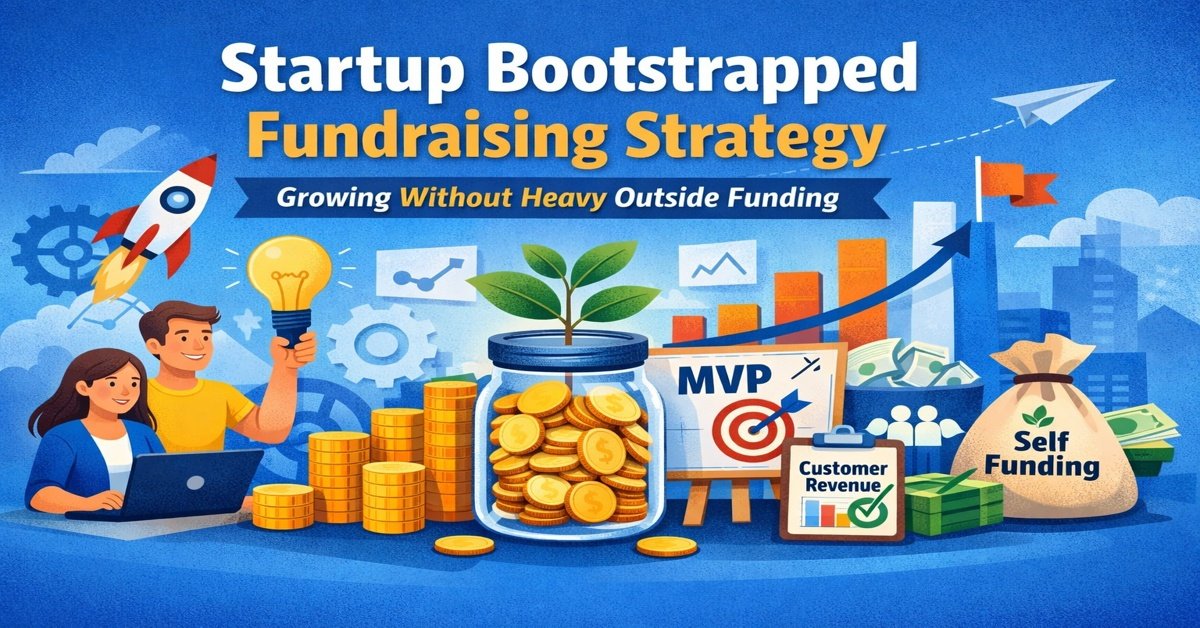
Launching a startup is exciting, but funding is often the biggest challenge founders face. Many entrepreneurs assume they must raise venture capital immediately. In reality, many successful startups grow using a bootstrapped fundraising strategy—building the company with minimal outside funding while generating revenue early.
A startup bootstrapped fundraising strategy focuses on careful spending, early profitability, and smart resource management. Instead of relying heavily on investors, founders grow the business using personal savings, revenue, and small funding sources.
Today, this approach is gaining attention because founders want more control, sustainable growth, and less investor pressure.
Why Bootstrapped Fundraising Matters in Today’s Startup Ecosystem
Modern startups operate in a very different environment than a decade ago. Venture capital is competitive, investors are cautious, and startups are expected to show real traction before raising large rounds.
Because of this shift, bootstrapping has become a practical strategy.
Key reasons founders choose bootstrapping
- Full ownership and control
- Less pressure for hyper-growth
- Focus on profitability early
- Better discipline with spending
- Stronger business fundamentals
Many well-known companies began as bootstrapped ventures before raising outside funding—or without raising it at all.
This strategy helps founders build sustainable companies rather than investor-driven experiments.
What Is a Startup Bootstrapped Fundraising Strategy?
A bootstrapped fundraising strategy means growing a startup with little or no external investment while reinvesting revenue back into the business.
Instead of raising large venture capital rounds, founders use a mix of smaller funding sources such as:
- Personal savings
- Revenue from early customers
- Friends and family funding
- Grants
- Angel investments (later stage)
The main goal is financial independence and gradual growth.
This approach often leads to companies with stronger financial discipline and clearer product-market fit.
Core Principles of Bootstrapped Startup Growth
A successful bootstrapped fundraising strategy is built on several key principles.
1. Focus on Revenue Early
Bootstrapped startups prioritize paying customers from the beginning.
Instead of building products for years without revenue, founders aim to:
- Launch a minimum viable product (MVP)
- Validate demand quickly
- Start generating income as soon as possible
Early revenue becomes the startup’s main source of funding.
2. Keep Operating Costs Low
Cost control is essential when external funding is limited.
Bootstrapped founders typically:
- Work remotely or in small offices
- Use affordable SaaS tools
- Outsource selectively
- Avoid large teams early on
The goal is to extend runway without relying on investors.
3. Reinvest Profits Into Growth
Instead of distributing profits early, bootstrapped startups reinvest revenue into growth.
This might include:
- Product improvements
- Marketing campaigns
- Hiring key team members
- Expanding infrastructure
This reinvestment cycle helps startups scale without large capital injections.
4. Validate Product-Market Fit Quickly
Bootstrapped startups cannot afford long development cycles.
They typically follow a lean startup approach:
- Build a simple product
- Test it with real users
- Gather feedback
- Improve quickly
This method reduces risk and ensures the startup solves a real customer problem.
Common Bootstrapped Funding Sources
Even bootstrapped startups sometimes use small funding channels.
Personal Savings
Many founders start by investing their own money. This allows full control but also requires careful budgeting.
Friends and Family
Early support often comes from trusted people who believe in the founder’s vision.
Customer Revenue
The most sustainable funding source is paying customers. Revenue replaces the need for large investment rounds.
Startup Grants
Governments and innovation programs sometimes offer grants that do not require equity.
Angel Investors (Selective)
Some bootstrapped startups eventually accept small angel investments after proving traction.
Advantages of a Bootstrapped Fundraising Strategy
Bootstrapping offers several powerful benefits.
Founder Control
Without large investors, founders maintain decision-making power.
Sustainable Growth
Growth is tied to real demand and revenue, not investor expectations.
Financial Discipline
Limited funding forces startups to focus on efficient operations.
Better Long-Term Valuation
Startups that reach profitability often negotiate better terms if they raise capital later.
Challenges Bootstrapped Startups Face
Bootstrapping also comes with real difficulties.
Slower Growth
Limited capital can slow expansion compared to heavily funded competitors.
Resource Constraints
Founders must manage limited staff, marketing budgets, and infrastructure.
Higher Personal Risk
When founders invest personal savings, financial risk increases.
However, many entrepreneurs accept these challenges in exchange for greater independence and ownership.
Practical Tips for Bootstrapping a Startup Successfully
If you want to build a startup without heavy investment, consider these strategies.
Start With a Small, Valuable Problem
Solve a specific problem for a defined audience rather than building a large complex platform immediately.
Build an MVP First
Avoid overbuilding. Launch a simple version of the product and improve it over time.
Focus on Cash Flow
Track revenue and expenses carefully. Positive cash flow keeps the startup alive.
Leverage Low-Cost Marketing
Bootstrapped startups often rely on:
- Content marketing
- SEO
- Partnerships
- Community building
- Social media
These channels can generate growth without massive budgets.
Automate Where Possible
Using affordable tools can reduce the need for large teams.
Examples include:
- CRM software
- Email automation
- Project management tools
Automation helps maintain efficiency while scaling.
When Bootstrapped Startups Should Consider Raising Funding
Bootstrapping does not mean avoiding funding forever.
Many founders bootstrap first and raise capital after proving their business model.
External funding may make sense when:
- Product-market fit is validated
- Revenue is growing
- Expansion requires significant capital
- Market competition is increasing
At this stage, startups often receive better valuations and stronger investor interest.
Conclusion
A startup bootstrapped fundraising strategy allows founders to build companies with greater independence, financial discipline, and long-term sustainability.
By focusing on early revenue, cost control, and continuous product validation, bootstrapped startups can grow steadily without heavy reliance on venture capital.
While this approach may require patience and careful planning, it often results in stronger businesses with healthier financial foundations.
For many entrepreneurs, bootstrapping is not just a funding method—it is a strategic way to build resilient startups in today’s competitive landscape.
CLICK HERE FOR MORE BLOG POSTS