
Introduction
BPC 157 has become one of the most talked-about peptides in the wellness, sports recovery, and biohacking communities. Short for Body Protection Compound 157, it is a synthetic peptide derived from a protective protein naturally found in the stomach.
People use it to support healing — from tendons and ligaments to gut lining and even neurological recovery. But the most common question remains the same: what is the right BPC 157 dosage?
Getting the dosage right is important. Too little may produce no noticeable effect. Too much raises concerns about tolerability and cost. This guide breaks down what is currently known about BPC 157 dosing, how it is administered, and what factors influence the right amount for different purposes.
What Is BPC 157 and Why Do People Use It?
BPC 157 is a pentadecapeptide — a chain of 15 amino acids. It was originally studied for its gastroprotective properties, meaning its ability to protect and heal the stomach and intestinal tract.
Over time, research expanded into other areas:
- Tendon and ligament repair — one of the most popular use cases among athletes
- Muscle healing — supporting recovery after injury or intense training
- Gut health — particularly for conditions like leaky gut, IBS, and inflammatory bowel issues
- Nerve and brain protection — some animal studies suggest neuroprotective effects
- Joint and bone healing — early research shows promise
Most of the existing evidence comes from animal studies, primarily in rodents. Human clinical trials are still limited, which means dosage recommendations in the community are largely based on extrapolated animal data and anecdotal reports from experienced users.
BPC 157 Dosage: What the Research Suggests
General Dosage Range
The most commonly reported dosage range for BPC 157 in human use is 200 mcg to 500 mcg per day.
Some practitioners and researchers reference a range as specific as 1–10 mcg per kilogram of body weight, which aligns with the doses used in animal studies when converted to human equivalent doses (HED).
For a person weighing 70–80 kg, this translates roughly to:
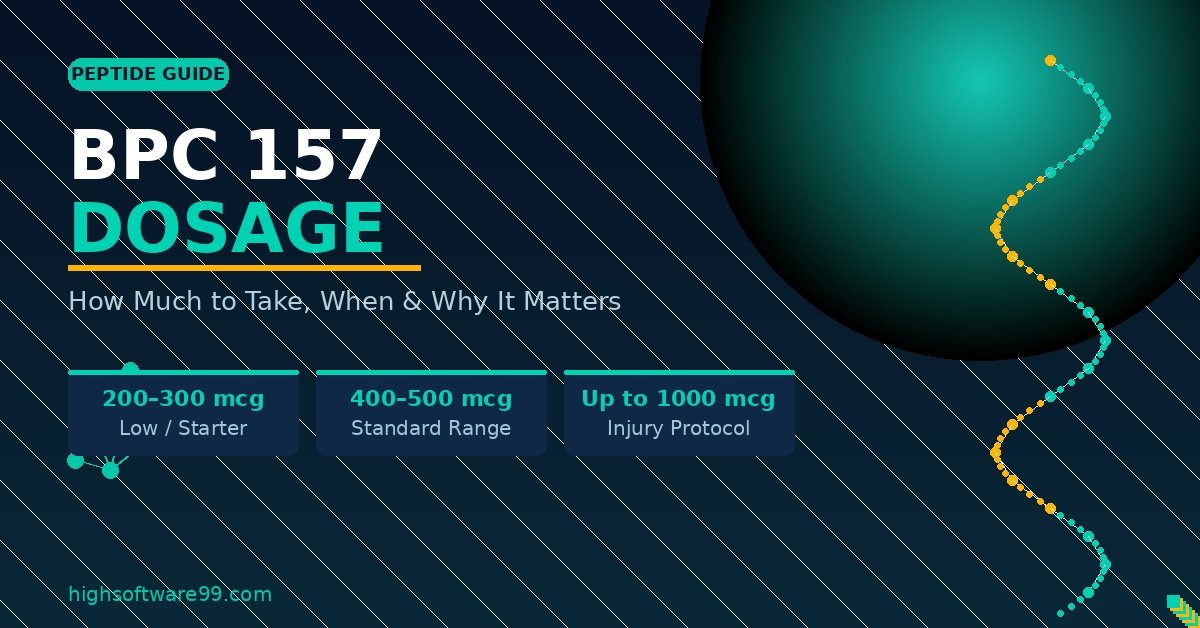
- Lower end: 200–300 mcg/day
- Mid range: 400–500 mcg/day
- Higher end: up to 600–1000 mcg/day (less common, used for severe injuries)
Most users and practitioners recommend starting at the lower end of the range to assess tolerance before increasing.
How Long Should a Cycle Last?
Typical BPC 157 cycles last 4 to 12 weeks, depending on the goal:
- Acute injury recovery: 4–6 weeks
- Chronic conditions or gut healing: 8–12 weeks
- Preventive or performance use: shorter cycles of 4 weeks
There is no universally agreed-upon “ideal” cycle length because long-term human safety data is still limited.
BPC 157 Administration Methods
The method of administration matters because it affects how the peptide reaches its target tissue.
Subcutaneous Injection (SubQ)
This is the most common method for systemic effects. The peptide is injected into the fatty tissue just under the skin — often near the site of injury.
- Dosage: 200–500 mcg per injection
- Frequency: Once or twice daily
- Why it works: SubQ delivery allows the peptide to enter systemic circulation efficiently
Intramuscular Injection (IM)
Some users prefer IM injection when targeting deep muscle injuries. The method is similar to SubQ but delivers the peptide deeper into the tissue.
Oral BPC 157
Oral capsules or tablets are available and are growing in popularity. Oral BPC 157 is particularly suited for gut-related conditions since the peptide acts locally in the gastrointestinal tract.
- Dosage for oral use: typically 500 mcg to 1000 mcg per day
- Why higher oral dose? Bioavailability may be lower via oral route, so slightly higher amounts are often used
Nasal Spray
A less common method, nasal administration is sometimes used for neurological or cognitive applications. It allows the peptide to bypass the blood-brain barrier more directly.
Dosage by Use Case
Different goals call for slightly different approaches. Here is a practical breakdown:
For Tendon and Ligament Injuries
- Dose: 300–500 mcg/day
- Method: SubQ injection near the injury site
- Duration: 6–8 weeks
- Why: Animal studies show BPC 157 promotes tendon-to-bone healing and upregulates growth hormone receptors in tendon tissue
For Gut Healing and IBS
- Dose: 250–500 mcg/day (oral or SubQ)
- Method: Oral capsules are preferred for direct GI tract exposure
- Duration: 8–12 weeks
- Why: BPC 157 appears to reduce gut inflammation, accelerate mucosal healing, and modulate serotonin and dopamine pathways in the gut
For Muscle Recovery
- Dose: 200–400 mcg/day
- Method: SubQ or IM injection
- Duration: 4–6 weeks
- Why: BPC 157 has shown angiogenic properties — it helps new blood vessels form, which supports faster tissue repair
For Joint and Bone Issues
- Dose: 400–500 mcg/day
- Method: SubQ injection near the affected joint
- Duration: 6–10 weeks
- Why: Studies suggest BPC 157 stimulates osteoblast activity and may support bone mineral density
Factors That Affect the Right BPC 157 Dosage
There is no single universal dose because individual response varies. Key factors include:
- Body weight — heavier individuals may require higher doses within the safe range
- Severity of injury or condition — acute severe injuries may benefit from higher doses early on
- Administration method — oral use typically requires more than injectable forms
- Individual sensitivity — some users notice effects at 200 mcg; others need 500 mcg
- Source and purity — peptide quality significantly affects efficacy; low-purity products may underdeliver even at higher doses
Potential Side Effects and Safety Considerations
BPC 157 has a strong safety profile in animal studies. Reported side effects in humans are generally mild and may include:
- Nausea (usually temporary)
- Dizziness or lightheadedness
- Fatigue, particularly in the early days
- Injection site irritation (for injectable forms)
No serious adverse effects have been widely reported in the community. However, because large-scale human trials are lacking, long-term safety data remains unclear.
Important cautions:
- BPC 157 is not approved by the FDA as a medical treatment
- It is classified as a research chemical in most countries
- Quality and purity vary significantly between suppliers
- Anyone with cancer, active infections, or hormonal conditions should exercise particular caution and consult a physician
How to Use BPC 157 Responsibly
If you are considering BPC 157, here are practical steps to approach it wisely:
- Start low — begin at 200–250 mcg/day and assess how your body responds over the first two weeks
- Source carefully — use suppliers that provide third-party certificates of analysis (COA)
- Match method to goal — oral for gut issues, injectable for musculoskeletal injury
- Track your results — keep a simple log of dosage, timing, and any changes you notice
- Consult a knowledgeable practitioner — ideally someone familiar with peptide therapy
- Do not stack blindly — combining BPC 157 with TB-500 or other peptides is common, but understand each compound before combining them
Conclusion
BPC 157 dosage is not one-size-fits-all, but the evidence and collective experience point to a practical range of 200 mcg to 500 mcg per day for most users and goals. The right dose depends on your body weight, the condition you are targeting, how you administer it, and the quality of the product you use.
The most important principle is to start conservatively, monitor your response, and adjust from there. BPC 157 shows genuine promise — particularly for healing injuries and supporting gut health — but it deserves the same respect and caution as any bioactive compound.
As human clinical research continues to grow, dosage guidelines will become more refined. Until then, working with a qualified practitioner and sourcing high-purity peptides are the two most important steps you can take.
You Might Also Enjoy:
Startup Bootstrapped Fundraising Strategy: How Founders Grow Without Heavy Outside Funding
Brand Name Normalization Rules: A Complete Guide for Consistent Branding and SEO