If you’ve ever stood in the tea aisle staring at endless boxes of tea bags, wondering what lies beyond them, you’re not alone. Loose leaf tea often feels like a world reserved for enthusiasts with fancy kettles and intricate rituals. But the truth? It’s far simpler—and far more rewarding—than it looks.
Switching to a loose leaf tea starter kit is one of the easiest ways to upgrade your daily routine. It brings richer flavors, better quality, and a calming ritual that turns an ordinary cup into something meaningful. Whether you’re here out of curiosity or ready to make the leap, this guide will walk you through everything you need to get started—without confusion or overwhelm.
ALSO READ: Latest Dutch Bros Menu Drinks: Popular Drinks You Must Try
What Is A Loose Leaf Tea Starter Kit?
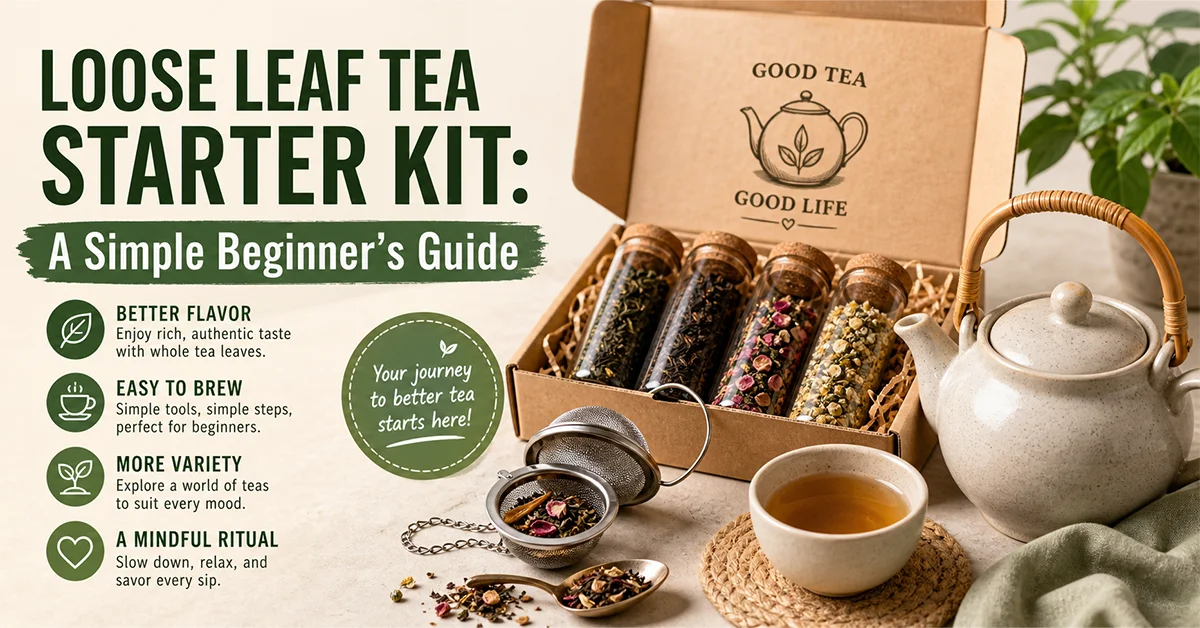
A loose leaf tea starter kit is a beginner-friendly collection of essential tools and teas designed to help you brew loose leaf tea at home. Instead of relying on pre-packaged tea bags, you measure, steep, and enjoy whole tea leaves.
Typically, a starter kit includes:
- A tea infuser or strainer
- A teapot or mug with built-in filter
- A few varieties of loose leaf tea
- Sometimes a scoop or measuring spoon
It’s essentially your all-in-one entry point into a more flavorful and customizable tea experience.
Why Choose Loose Leaf Tea Over Tea Bags?
Before diving into the kit itself, it helps to understand why so many people are making the switch.
Better Flavor and Aroma
Loose leaf tea uses whole or large pieces of leaves, which retain essential oils and natural flavors. Tea bags, on the other hand, often contain broken leaves or dust, resulting in a flatter taste.
Higher Quality Ingredients
Loose leaf tea is usually less processed and often sourced more carefully. This means you’re getting a purer, more authentic tea experience.
More Variety
From floral blends to earthy classics, loose leaf tea offers an incredible range of options you won’t typically find in tea bags.
Custom Brewing
You control everything—strength, steeping time, and flavor intensity. It’s tea, tailored to your preference.
What’s Inside A Loose Leaf Tea Starter Kit?
Let’s break down the key components you’ll likely find (or should look for) in a beginner kit.
Tea Infuser or Strainer
This is the heart of your brewing setup. It holds the tea leaves while allowing water to circulate freely.
Common types include:
- Ball infusers
- Basket strainers
- Silicone infusers
Basket-style infusers are often the best for beginners because they allow more room for the leaves to expand.
Teapot or Infuser Mug
Some starter kits come with a teapot or a mug that has a built-in strainer.
Benefits include:
- Easy brewing and pouring
- Less mess
- Perfect for single servings or small batches
If you’re just starting out, an infuser mug is a simple and practical choice.
Loose Leaf Tea Samples
A good starter kit will include a variety of teas so you can explore different flavors.
You might find:
- Green tea (light and fresh)
- Black tea (bold and rich)
- Herbal blends (caffeine-free and soothing)
- Oolong tea (balanced and aromatic)
Trying different types helps you discover what suits your taste.
Measuring Scoop
While not always included, a scoop makes it easier to portion your tea correctly.
General rule:
- 1 teaspoon of loose leaf tea per cup of water
How To Use A Loose Leaf Tea Starter Kit
Getting started is surprisingly easy. Here’s a simple step-by-step guide:
Heat Your Water
Different teas require different temperatures:
- Green tea: warm, not boiling
- Black tea: boiling
- Herbal tea: boiling
Measure Your Tea
Use about one teaspoon per cup. Adjust based on how strong you like your tea.
Steep the Tea
Place the tea in your infuser and pour hot water over it.
Steeping times:
- Green tea: 2–3 minutes
- Black tea: 3–5 minutes
- Herbal tea: 5–7 minutes
Remove the Leaves
Take out the infuser or strain the tea. This prevents over-steeping and bitterness.
Enjoy
Sip slowly and notice the depth of flavor—it’s a completely different experience from tea bags.
Choosing The Right Loose Leaf Tea Starter Kit
Not all kits are created equal. Here’s what to consider when picking one:
Quality of Materials
Look for:
- Stainless steel infusers
- Heat-resistant glass or ceramic teapots
Avoid cheap plastic components that can affect taste.
Variety of Teas
A good starter kit should include multiple tea types so you can experiment.
Ease of Use
As a beginner, simplicity matters. Choose a kit that doesn’t require complicated steps.
Size and Portability
If you’re always on the go, consider a compact infuser bottle or travel-friendly kit.
Best Types Of Tea For Beginners
If you’re unsure where to start, these teas are beginner-friendly and widely loved:
Green Tea
Light, refreshing, and slightly grassy. Great for a gentle introduction.
Black Tea
Strong and bold, perfect if you enjoy coffee-like intensity.
Herbal Tea
Naturally caffeine-free and available in endless flavors like chamomile, mint, and hibiscus.
Oolong Tea
A middle ground between green and black tea with complex flavors.
Common Mistakes Beginners Make
Starting something new always comes with a learning curve. Here are a few mistakes to avoid:
Using Water That’s Too Hot
This can burn delicate leaves, especially green tea, resulting in bitterness.
Over-Steeping
Leaving tea too long in water makes it overly strong and unpleasant.
Using Too Many Leaves
More tea doesn’t always mean better flavor—it can make your brew harsh.
Ignoring Tea Storage
Loose leaf tea should be stored in an airtight container away from light and moisture.
Benefits Of Using A Loose Leaf Tea Starter Kit
Beyond taste, there are some surprisingly meaningful benefits:
A Mindful Routine
Brewing tea becomes a calming ritual that encourages you to slow down.
Better Sustainability
Loose leaf tea often uses less packaging compared to tea bags, making it a more eco-friendly choice.
Cost-Effective in the Long Run
Although the initial setup may seem more expensive, loose leaf tea can be brewed multiple times, giving you more value.
Tips To Enhance Your Tea Experience
Once you’re comfortable, try these simple upgrades:
- Experiment with steeping times to find your perfect strength
- Add natural ingredients like honey, lemon, or spices
- Re-steep high-quality leaves for multiple cups
- Use filtered water for a cleaner taste
Is A Loose Leaf Tea Starter Kit Worth It?
Absolutely—especially if you enjoy tea even casually. It transforms a simple drink into a richer, more personalized experience. You don’t need to be an expert or invest heavily. A basic starter kit is enough to open the door to a whole new world of flavor and relaxation.
Conclusion
Starting your journey with a loose leaf tea starter kit doesn’t have to be complicated or intimidating. In fact, it’s one of the simplest ways to elevate your daily routine. With just a few tools and a little curiosity, you can enjoy fresher flavors, better quality, and a more mindful tea-drinking experience.
Think of it less as a hobby and more as a small lifestyle upgrade—one cup at a time. Whether you prefer bold, delicate, or herbal blends, there’s a loose leaf tea out there waiting to become your new favorite.
FAQs
What is a loose leaf tea starter kit?
A loose leaf tea starter kit is a collection of basic tools and tea samples that help beginners brew loose leaf tea easily at home.
Is loose leaf tea better than tea bags?
Yes, loose leaf tea generally offers better flavor, higher quality, and more variety compared to standard tea bags.
How much tea should I use per cup?
Typically, one teaspoon of loose leaf tea per cup of water is a good starting point.
Can I reuse loose leaf tea?
Yes, many high-quality loose leaf teas can be steeped multiple times, often producing slightly different flavors with each brew.
Do I need a teapot to use loose leaf tea?
No, you can simply use an infuser in a regular mug, making it very beginner-friendly.
ALSO READ: Can Birds Drink Milk? The Surprising Truth Every Bird Lover Needs to Know

I’m an author and journalist specializing in food and cooking. Caffeine Basics is my ninth book. I’ve written about the U.S. wine industry, international foods, shrinking your “cookprint,” and cooking with kids. Great Bar Food at Home was a James Beard Award finalist, and Cooking Green: Reducing Your Carbon Footprint in the Kitchen won a Green Book Award. Publishers include John Wiley & Sons, ClarksonPotter, Macmillan and others.