
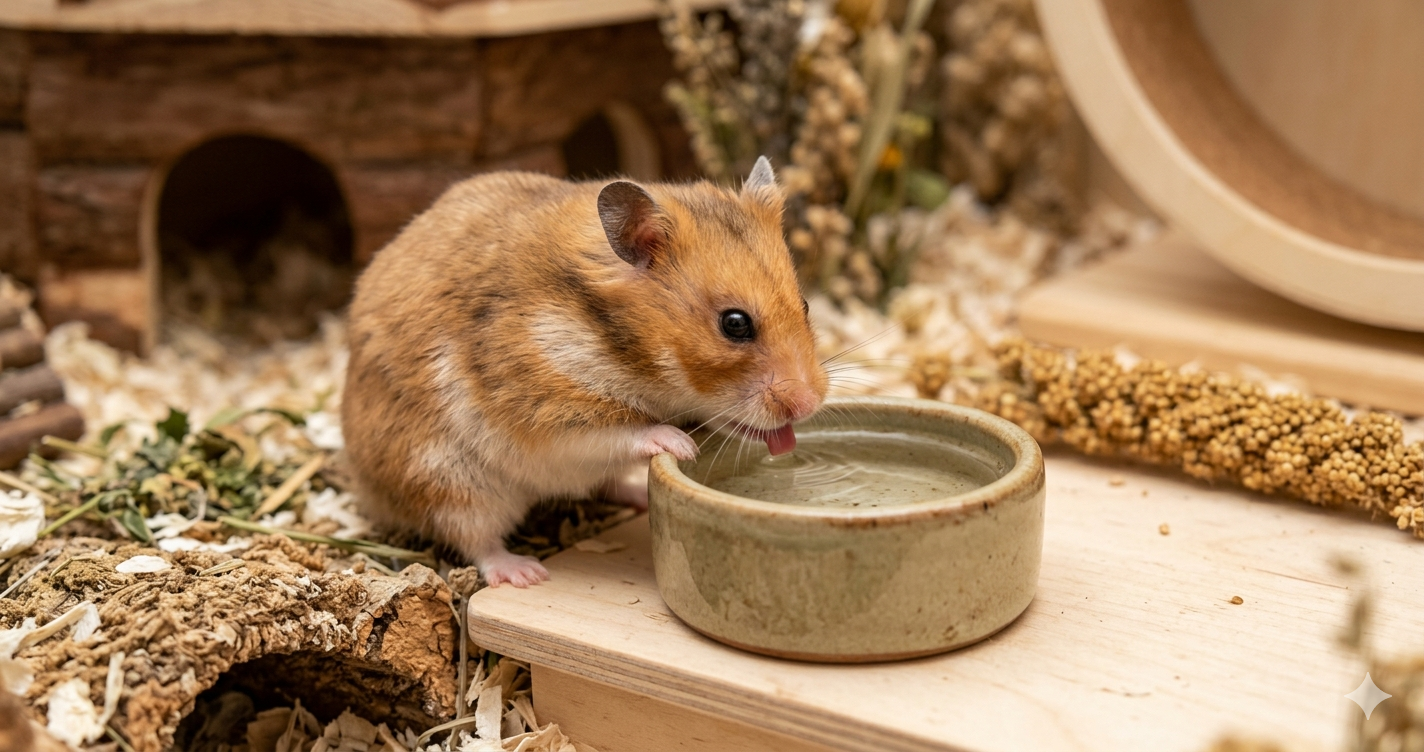
Years ago, when I first started keeping hamsters, I followed the “standard” pet store advice without question. I bought the plastic cage, the neon-colored wheel, and that ubiquitous plastic gravity-fed water bottle. You know the one—it drips incessantly, makes a loud clack-clack-clack sound at 3 AM, and is a nightmare to scrub.
It wasn’t until I noticed one of my elderly Syrians, Barnaby, struggling to crane his neck at the awkward angle required by the nozzle that I asked myself: Can hamsters drink out of a bowl?
The short answer is a resounding yes. In fact, in the professional hamster-keeping community, we’ve seen a massive shift toward “bowl-life.” But making the switch isn’t as simple as tossing a cereal bowl into the bedding.
In this guide, I’m going to draw on a decade of experience to show you exactly why bowls are often superior to bottles, how to set them up safely, and the specific scenarios where a bottle might actually be the better choice. By the end of this, you’ll have the confidence to choose the best hydration method for your furry friend.
Understanding the “Bowl vs. Bottle” Debate
To understand why the question of whether hamsters can drink out of a bowl is so popular, we have to look at how these animals live in the wild. Hamsters are native to arid regions in places like Syria and Mongolia. In their natural habitat, they don’t find vertical metal tubes with ball bearings hanging from the sky. They drink from puddles, dew on leaves, or small depressions in the earth.
Drinking from a bowl is a natural, ergonomic posture for a hamster. When a hamster uses a bowl, they lap up water just like a dog or a cat. This allows them to take in more water with less effort.
Conversely, water bottles require a hamster to tilt their head back and use their tongue to push a metal ball. For older hamsters with arthritis or younger pups with less strength, this can be physically taxing. Furthermore, bottles are notorious for “air locks,” where a bubble prevents water from flowing, or “leaks,” which can soak your hamster’s nesting material and lead to life-threatening respiratory issues or “wet tail.”
The “Open Water” Concept
Think of a water bowl as a “micro-oasis.” It provides easy access and encourages better hydration. However, the reason many pet stores don’t recommend them is purely about maintenance. A bottle is “set it and forget it” (until it breaks), while a bowl requires a bit more mindfulness from the owner.
The Benefits of Using a Water Bowl
If you’re on the fence, let me break down the real-world perks of ditching the bottle. After switching dozens of my own rescues to bowls, I’ve noticed three major improvements:
1. Superior Hygiene and Ease of Cleaning
Let’s be honest: cleaning a water bottle is a chore. You need a specialized brush to reach the bottom, and the metal nozzle is a literal breeding ground for biofilm and bacteria. You can’t see what’s growing inside that little metal straw.
A ceramic bowl, however, is a dream to clean. You can see every speck of dust, and you can toss it in the dishwasher or scrub it with hot soapy water in seconds.
2. No More Mechanical Failures
I’ve had high-end bottles stop working because a tiny piece of substrate got stuck in the ball bearing. I’ve also had entire 10-ounce bottles drain overnight because a strand of hair created a capillary effect, soaking the cage. A bowl has no moving parts. If there is water in the bowl, your hamster can get to it. Period.
3. Noise Reduction
If your hamster’s cage is in your bedroom, you know the “midnight clack.” The sound of a hamster aggressively licking a metal ball is surprisingly loud. Drinking from a bowl is silent. You’ll sleep better, and your hamster will have a more peaceful environment.
Who is this for?
- Syrian Hamsters: Their size makes it easy for them to reach over the rim of most small dishes.
- Elderly Hamsters: Provides an ergonomic drinking position that doesn’t strain the neck.
- High-End Enclosures: If you have a wooden or glass “Niteangel-style” setup, a ceramic bowl looks much more aesthetic and natural.
Step-by-Step: How to Safely Transition to a Bowl
You can’t just drop a Tupperware lid in the cage and call it a day. Safety is paramount because hamsters are small, and getting wet can lead to hypothermia.
Step 1: Choose the Right Vessel
Do not use a deep bowl. You want a small, heavy ceramic dish or a tealight candle holder. The bowl should be shallow enough that the hamster can’t accidentally fall in and drown, but heavy enough that they can’t flip it over.
Step 2: Location is Everything
Never place the water bowl directly on the bedding. Hamsters love to burrow, and they will quickly kick wood shavings or paper bedding into the water, soaking it up like a sponge.
The Fix: Place the bowl on a solid surface, such as a wooden platform, a flat-topped hideout, or a dedicated slate tile.
Step 3: The “Safety Pebble” (Optional)
If you are worried about a smaller dwarf hamster getting its belly wet, place a clean, smooth river stone in the center of the dish. This leaves enough room for drinking around the edges but prevents the hamster from walking through the middle.
Step 4: The Dual-Method Transition
Don’t take the bottle away immediately. For the first week, keep both available. Observe your hamster. Once you see them regularly using the bowl and the water level in the bottle remains stagnant, you can safely remove the bottle.
Recommended Tools and Setups
Based on my testing, here are the best options for “bowl-life”:
| Tool Type | Recommendation | Pros | Cons |
| Primary Choice | Ceramic Tea Light Holder | Heavy, cheap, shallow, easy to find. | None, really. |
| Premium Choice | Niteangel Glass Water Station | Aesthetic, includes a sturdy base. | More expensive. |
| The “Hack” | Glazed Ceramic Ramekin | Very stable, hold more water. | Might be too tall for tiny Roborovskis. |
Expert Tip: Avoid plastic bowls. Hamsters are prolific chewers, and a plastic bowl will quickly become a jagged mess that can cut their delicate mouths. Stick to ceramic, glass, or stainless steel.
Common Mistakes (And How to Fix Them)
Even seasoned owners make mistakes when first asking can hamsters drink out of a bowl? Here is what to watch out for:
- Mistake: Using a bowl that is too deep.
- The Fix: Use a dish no deeper than 0.5 to 1 inch. If the hamster has to climb into it to reach the water, it’s too deep.
- Mistake: Placing the bowl under a “burrowing zone.”
- The Fix: Put the water dish on the “dry side” of the cage, away from where they do most of their digging, or use a raised platform.
- Mistake: Forgetting to change the water daily.
- The Fix: Because the water is open to the air, dust and fur will land in it. You must rinse and refill the bowl every single morning.
The Verdict: Should You Make the Switch?
In my decade of experience, switching to a water bowl is one of the easiest ways to level up your hamster’s quality of life. It’s more natural, easier for you to clean, and eliminates the risk of those pesky bottle malfunctions.
While bottles still have a place—specifically for travel or for hamsters who are “problem burrowers” and insist on burying everything they own—the bowl is the gold standard for a permanent home setup.
If you’re looking to provide the most “species-appropriate” care possible, give the bowl a try. Your hamster (and your ears at 3 AM) will thank you.
Frequently Asked Questions
Can hamsters drink out of a bowl if they are babies?
Yes, but you must be extra cautious. Use a very shallow dish (like a bottle cap) to ensure they cannot accidentally submerge themselves. As they grow, you can move to a standard ceramic dish.
Will my hamster drown in a water bowl?
If you use a proper, shallow dish (under 1 inch deep), the risk is virtually zero. Hamsters are capable of standing on their hind legs to drink from the rim.
How often should I clean the water bowl?
You should rinse it and provide fresh water daily. Once a week, wash it thoroughly with pet-safe soap or run it through the dishwasher to remove any bacteria.
What if my hamster keeps putting bedding in the bowl?
This is the most common complaint. The solution is to move the bowl to a higher platform or a “bedding-free” zone of the cage, like a large flat rock or a wooden level.
Can all species of hamsters use bowls?
Yes. Syrians, Dwarfs, and Roborovskis can all successfully use bowls. Just ensure the size of the bowl is proportional to the size of the hamster.
Do I need to teach my hamster how to use a bowl?
Usually, no. Their sense of smell will lead them to the water. However, during the transition, you can “scent” the rim with a tiny bit of cucumber juice to pique their interest.