You picked up a matcha latte because someone told you it was a “healthier alternative to coffee.” Now you’re standing in the kitchen wondering: does this bright green powder actually have caffeine in it? And if so, how much am I drinking?
Does Matcha Have Caffeine in It?
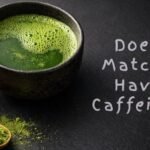
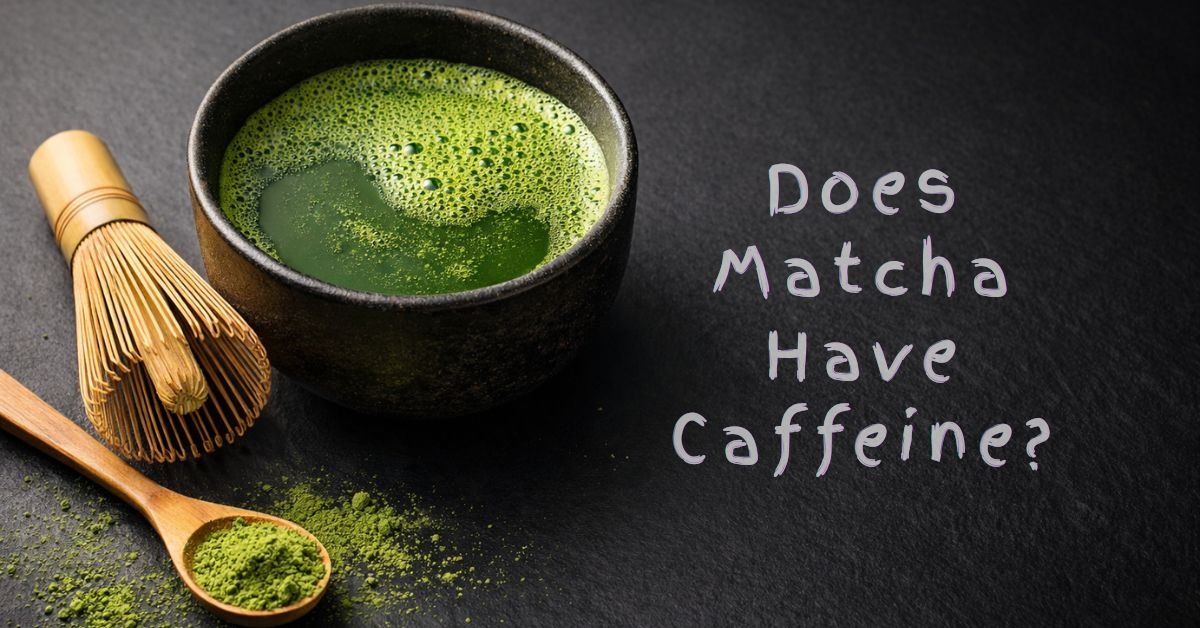
Yes. Matcha is made from the leaves of Camellia sinensis — the same plant that produces all true teas, including black tea, oolong, and standard green tea. Caffeine is a natural compound in these leaves, functioning as the plant’s built-in pest deterrent.
What makes matcha different from a regular green tea bag is the production process. Matcha comes from tencha leaves that are shade-grown for roughly 20–30 days before harvest. This shading triggers the plant to ramp up production of both caffeine and amino acids (particularly L-theanine) as it tries to capture more light. After harvest, the leaves are stone-ground into an ultra-fine powder.
Here’s the critical distinction: when you drink standard green tea, you steep leaves in water and then discard them. You’re only extracting a fraction of the leaf’s total caffeine and nutrients. With matcha, you’re whisking the entire powdered leaf into water and consuming it whole. Every milligram of caffeine in that leaf ends up in your cup.
That’s why matcha consistently contains more caffeine than regular steeped green tea — not because it’s a different species, but because you’re drinking the whole leaf instead of just a diluted extract.
How Much Caffeine Does Matcha Have?
The caffeine content in matcha ranges from approximately 19 to 44 mg per gram of powder. Since most people use between 1 and 4 grams per serving, a typical cup contains:
- Light serving (1 g / ½ tsp): 19–44 mg of caffeine
- Standard serving (2 g / 1 tsp): 38–88 mg of caffeine
- Strong serving (3–4 g / 1½–2 tsp): 57–176 mg of caffeine
That’s a wide range, and it exists because several variables shift the number significantly.
What Affects Caffeine Levels in Matcha
Grade and quality. Ceremonial-grade matcha, made from the youngest, most tender leaves harvested in the first flush of spring, generally contains more caffeine than culinary-grade matcha. Higher-quality matcha also tends to come from plants that were shaded longer, further increasing the caffeine concentration.
Harvest timing. First-harvest (ichibancha) leaves are richer in both caffeine and L-theanine than second or third-harvest leaves. This is partly why premium matcha costs more — and partly why it hits differently.
Freshness. Caffeine degrades over time, especially when matcha is exposed to oxygen, light, or heat. A freshly opened tin of matcha will deliver more caffeine than a package that’s been sitting open in your pantry for six months.
Preparation method. Water temperature and whisking thoroughness can influence extraction, though this matters less with matcha than with steeped teas since you’re consuming the powder directly. Using hotter water may break down clumps more effectively, ensuring you ingest the full caffeine content.
Serving size. This is the biggest variable, and it’s entirely within your control. A café matcha latte might use 2–3 grams of powder, while someone making a traditional bowl of koicha (thick matcha) could use 4 grams or more.
For practical purposes, if you’re using a standard teaspoon (~2 grams) of decent ceremonial-grade matcha, expect roughly 60–70 mg of caffeine. That’s comparable to a single shot of espresso.
Does Matcha Have More Caffeine Than Coffee?
It depends entirely on the serving size — and this is where the conversation gets nuanced.
Gram for gram, matcha has more caffeine than coffee. Matcha contains 19–44 mg of caffeine per gram. Coffee beans contain roughly 10–12 mg per gram. So by weight, matcha is actually the stronger source.
Cup for cup, coffee usually wins. A standard 8-ounce cup of drip coffee uses about 10 grams of ground beans and delivers approximately 95–120 mg of caffeine. A typical matcha serving uses just 1–2 grams of powder, landing at 38–88 mg. You’d need to use 3+ grams of matcha to match a regular cup of coffee.
But it’s not that simple. Many café-style matcha lattes use 2–3 teaspoons of powder (4–6 grams), which pushes the caffeine content to 120–176 mg — right in line with or exceeding a standard coffee. And if you’re the type who orders a double-shot espresso (roughly 126 mg), a strong matcha serving is genuinely comparable.
The bottom line: matcha isn’t inherently lower in caffeine than coffee. It’s lower per typical serving because people tend to use less powder per cup than the amount of coffee grounds per brew. Adjust the serving size, and the gap narrows fast.
Does Matcha Have a Lot of Caffeine?
“A lot” is relative, so let’s put it in context against the FDA’s guideline of 400 mg per day as a safe upper limit for most healthy adults.
A standard matcha serving (2 g) at ~65 mg means you could comfortably drink 5–6 cups per day before approaching that ceiling. Most matcha drinkers have 1–2 servings, putting them well within safe territory.
Compared to other caffeinated beverages, matcha sits in the moderate range — noticeably more than regular green tea or cola, roughly equal to espresso, and generally less than drip coffee per cup. It’s not a low-caffeine beverage, but calling it “high caffeine” overstates things for anyone who’s used to drinking coffee.
For context: a 12-ounce can of cola has about 34 mg of caffeine. An 8.4-ounce Red Bull has about 80 mg. A tall (12 oz) Starbucks drip coffee has roughly 235 mg. Matcha is in the espresso neighborhood — meaningful caffeine, but not extreme.
Who should be careful: Pregnant individuals are generally advised to stay under 200 mg of caffeine per day, which means limiting matcha to 2–3 standard servings. Anyone with caffeine sensitivity, anxiety disorders, or who takes medications that interact with caffeine should start with half a teaspoon and assess their tolerance. Children should minimize or avoid matcha due to their lower body weight and higher sensitivity to stimulants.
How Matcha Caffeine Affects Your Body
This is where matcha genuinely separates itself from coffee — not in how much caffeine it delivers, but in how that caffeine behaves once you drink it.
The L-Theanine Factor
Matcha is one of the richest natural sources of L-theanine (L-gamma-glutamylethylamide), an amino acid that crosses the blood-brain barrier and directly influences brain activity. Shade-growing boosts L-theanine concentration significantly — matcha contains roughly five times more L-theanine than standard green tea.
L-theanine does two important things in the context of caffeine:
1. It promotes alpha brain wave activity. Alpha waves (8–12 Hz) are the brain state associated with calm, focused attention — the kind you feel during deep creative work or light meditation. Research published in peer-reviewed journals has consistently shown that L-theanine increases alpha wave activity, creating what people describe as “alert relaxation.” This is the physiological basis for why matcha feels focused rather than wired.
2. It modulates the caffeine response. Clinical studies have found that combining L-theanine with caffeine produces better sustained attention, faster reaction times, and improved accuracy on cognitive tasks compared to caffeine alone — with fewer side effects like jitteriness and anxiety. One study demonstrated that L-theanine actually counteracted the reduction in cerebral blood flow caused by caffeine in isolation, suggesting the two compounds genuinely balance each other at the neurochemical level.
The Whole-Leaf Delivery System
Beyond L-theanine, the fact that you’re consuming the entire powdered leaf creates a different pharmacokinetic profile. The caffeine in matcha is bound to catechins (particularly EGCG) and plant fiber, forming larger molecular structures that take longer to break down in the digestive tract. The result: caffeine is released more gradually into the bloodstream.
Coffee delivers caffeine through a liquid extract with no fiber matrix to slow absorption. This produces a faster spike — peak blood concentration within 15–45 minutes — followed by a sharper drop. Matcha’s release curve is gentler: a slower rise, a sustained plateau lasting roughly 3–6 hours, and a gradual tapering rather than a crash.
This isn’t speculation or marketing language. It’s the mechanical consequence of consuming caffeine in a whole-food matrix versus a filtered extract. The same dose of caffeine hits differently depending on its delivery system.
What This Feels Like in Practice
Most people who switch from coffee to matcha report the same pattern: less of an initial jolt, fewer jitters, more sustained focus through the afternoon, and no energy crash at 2 PM. The tradeoff is that matcha won’t produce the same immediate “wake up NOW” hit that a strong coffee delivers. If you need to go from asleep to alert in 15 minutes, coffee is still the better tool. If you want 4–6 hours of steady, focused energy without the anxiety spike, matcha has a legitimate biochemical advantage.
Matcha vs. Coffee: Comparison Table
| Category | Matcha (2 g serving) | Drip Coffee (8 oz) | Espresso (1 oz shot) |
|---|---|---|---|
| Caffeine | 38–88 mg | 95–120 mg | 60–65 mg |
| L-Theanine | 19–44 mg | 0 mg | 0 mg |
| Onset Time | 30–60 min (gradual) | 15–45 min (rapid) | 15–30 min (rapid) |
| Energy Duration | 3–6 hours | 1–3 hours | 1–2 hours |
| Crash/Jitters | Rare (L-theanine buffer) | Common | Common |
| Antioxidants (EGCG) | High (whole leaf) | Moderate | Moderate |
| Calories (plain) | ~3 kcal | ~2 kcal | ~1 kcal |
| Acidity | Low (pH ~7) | High (pH ~5) | High (pH ~5) |
| Preparation | Whisk powder into water | Brew grounds, filter | High-pressure extraction |
| Cost per serving | $1–4 (ceremonial) | $0.15–0.50 (home brew) | $0.30–0.75 (home) |
Key takeaway: Coffee delivers more caffeine per typical serving but with a shorter, spikier energy curve. Matcha delivers moderate caffeine with a smoother, longer-lasting experience due to L-theanine. Neither is objectively “better” — it depends on what you need from your caffeine.
Matcha vs. Other Beverages: Quick Caffeine Reference
| Beverage | Typical Caffeine |
|---|---|
| Matcha (1 tsp / 2 g) | 38–88 mg |
| Regular green tea (8 oz) | 25–40 mg |
| Black tea (8 oz) | 40–70 mg |
| Drip coffee (8 oz) | 95–120 mg |
| Espresso (1 oz) | 60–65 mg |
| Red Bull (8.4 oz) | 80 mg |
| Cola (12 oz) | 34 mg |
| Decaf coffee (8 oz) | 2–7 mg |
Myth vs. Fact: Matcha Caffeine Edition
Myth: Matcha is caffeine-free because it’s green tea. Fact: Matcha contains more caffeine than standard green tea — roughly 2–3 times as much — because you consume the entire leaf rather than just a steeped infusion.
Myth: Matcha always has less caffeine than coffee. Fact: A strong matcha serving (3–4 grams) can match or exceed the caffeine in a standard cup of drip coffee. The difference depends entirely on how much powder you use.
Myth: L-theanine “cancels out” caffeine. Fact: L-theanine doesn’t eliminate caffeine’s effects. It modulates the experience — promoting calm focus and reducing jitteriness — but the caffeine is still active in your system. You’ll still have trouble sleeping if you drink matcha too late in the day.
Myth: All matcha has the same caffeine content. Fact: Caffeine varies widely depending on the grade, harvest season, freshness, and how the tea was processed. Ceremonial-grade matcha from the first spring harvest will have significantly more caffeine (and L-theanine) than a culinary-grade powder from a later harvest.
Myth: Adding milk to matcha reduces the caffeine. Fact: Milk doesn’t change the total caffeine content. It affects flavor and mouthfeel, but every milligram of caffeine from the powder is still present in your latte.
A Note on Our Approach
This guide draws on peer-reviewed research from journals including Nutrients, Biological Psychology, and the Journal of Food Science, alongside data from the FDA and clinical studies on caffeine and L-theanine interaction. Caffeine ranges cited reflect consistent findings across multiple laboratory analyses of matcha powders at varying quality grades.
The practical observations about how matcha caffeine “feels” compared to coffee come from both published clinical trial data and the lived experience of a tea-focused editorial team that has tested and reviewed hundreds of matcha products over the past several years. We’ve found that the biochemistry aligns remarkably well with what daily matcha drinkers actually report — which is exactly what you’d hope for when the science is solid.
When specific caffeine numbers are given, they represent ranges because real-world matcha varies. Any source claiming matcha contains a single, precise caffeine number is oversimplifying.
FAQs
Does matcha have caffeine or not?
Yes. Matcha contains caffeine because it comes from the Camellia sinensis tea plant, which naturally produces caffeine. A typical serving delivers 38–88 mg, making it a moderate caffeine source — more than regular green tea but usually less per cup than drip coffee.
How much caffeine is in a matcha latte?
A matcha latte typically contains 60–120 mg of caffeine, depending on how much powder the café uses. Most shops add 1–2 teaspoons (2–4 grams). Making your latte at home gives you precise control over the dose. Adding milk or alt-milk doesn’t change the caffeine content.
Is matcha safe during pregnancy?
Matcha may be better tolerated by people prone to caffeine-related anxiety. Research shows that L-theanine increases GABA activity and alpha brain waves, which counteract the excitatory effects of caffeine. However, matcha still contains caffeine, so those with clinical anxiety should start with small servings and monitor their response.
Can I drink matcha before bed?
Not recommended. Despite L-theanine’s calming properties, matcha still contains active caffeine with a half-life of approximately 5–6 hours. Drinking matcha after 2–3 PM may interfere with sleep quality for most people. If you want an evening tea, opt for a caffeine-free herbal option instead.
Is matcha better than coffee for anxiety?
Matcha may be better tolerated by people prone to caffeine-related anxiety. Research shows that L-theanine increases GABA activity and alpha brain waves, which counteract the excitatory effects of caffeine. However, matcha still contains caffeine, so those with clinical anxiety should start with small servings and monitor their response.
Does the quality of matcha affect caffeine content?
Significantly. Ceremonial-grade matcha from the first spring harvest is shade-grown longer and made from younger leaves, resulting in higher concentrations of both caffeine and L-theanine. Culinary-grade matcha, often from later harvests, typically contains less of both. Freshness also matters — older, oxidized matcha loses caffeine potency over time.
What This Means for Your Daily Routine
Matcha is a legitimate caffeine source — not a caffeine-free health tonic, and not an overpowering stimulant. It sits in a practical middle ground: enough caffeine to meaningfully boost focus and energy, paired with L-theanine that shapes that caffeine into a smoother, more sustained experience than what coffee typically provides.
The matcha market continues to evolve rapidly. As of 2026, lab testing for caffeine content is becoming more accessible, and higher-quality ceremonial grades from Japanese producers like those in Uji and Nishio are more widely available internationally than ever before. The trend toward transparency in caffeine labeling means consumers will increasingly know exactly what’s in their cup — which is a good thing.
If you’re experimenting with matcha for the first time, start with 1 teaspoon (roughly 2 grams) in the morning. Pay attention to how the energy feels compared to your usual coffee. Most people notice the difference within the first week — not necessarily more or less energy, but a different quality of energy.
Next step: If you’re choosing between matcha grades, read our guide to ceremonial vs. culinary matcha to find the right fit for your budget and brewing style. And if you’re making the switch from coffee, our 7-day coffee-to-matcha transition plan walks you through it without the withdrawal headaches.

I’m an author and journalist specializing in food and cooking. Caffeine Basics is my ninth book. I’ve written about the U.S. wine industry, international foods, shrinking your “cookprint,” and cooking with kids. Great Bar Food at Home was a James Beard Award finalist, and Cooking Green: Reducing Your Carbon Footprint in the Kitchen won a Green Book Award. Publishers include John Wiley & Sons, ClarksonPotter, Macmillan and others.