
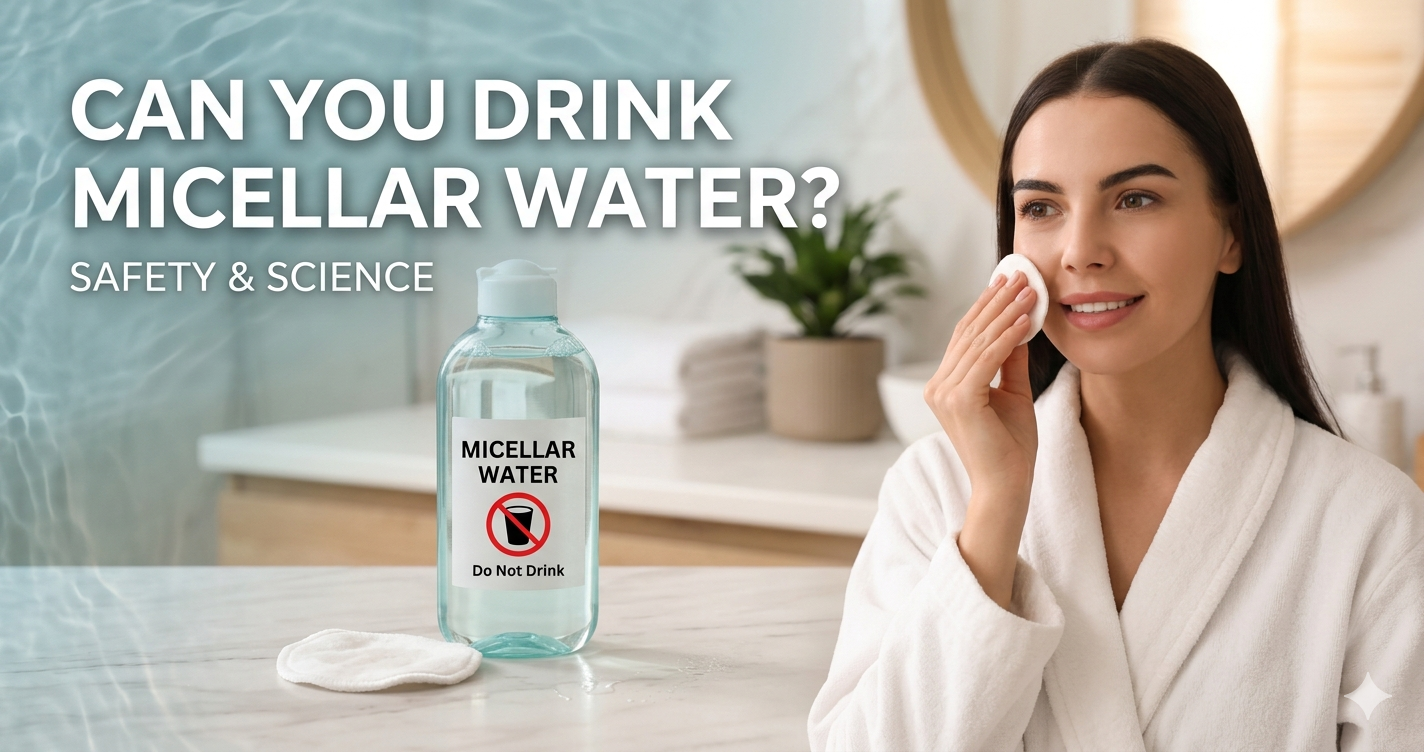
I’ll never forget the morning I was rushing to catch a flight, frantically packing my skincare kit, and watched my toddler grab my bottle of micellar water. Before I could blink, she had the cap off and was inches away from taking a “refreshing” gulp of what she thought was bottled water. My heart skipped a beat.
It’s a question that sounds silly until it isn’t: Can you drink micellar water? Whether it’s a curious child, a pet getting into your vanity, or a late-night bathroom mix-up where you grab the wrong bottle for a pill, the concern is real.
In my ten years of testing skincare formulations and consulting with dermatologists, I’ve seen this product evolve from a niche Parisian secret to a global bathroom staple. Today, we’re going to peel back the label and look at the chemistry, the risks, and the reality of what happens if micellar water moves from your cotton pad to your digestive tract. You’ll learn exactly what’s inside that bottle, why it’s a powerhouse for your face but a problem for your stomach, and what to do if an accidental ingestion occurs.
What Exactly Is Micellar Water? (The Science of the Tiny Bubble)
To understand why you shouldn’t drink it, you first have to understand what it actually is. Most people assume it’s just “fancy water.” In reality, it’s a sophisticated chemical solution designed for one specific job: lifting oil and dirt off a surface without scrubbing.
The name comes from micelles. Imagine a tiny, microscopic sphere. The outside of this sphere is “hydrophilic” (water-loving), and the inside is “lipophilic” (oil-loving). When you pour micellar water onto a cotton pad, these micelles act like tiny magnets. The water-loving heads stick to the pad, while the oil-loving tails hang out, waiting to grab onto the sebum, makeup, and pollution on your skin.
The Ingredients Behind the Magic
While the primary ingredient is indeed water (usually purified or hexylene glycol-based), it’s the “extras” that make it a skincare product rather than a beverage:
- Surfactants: These are the cleaning agents. Even “gentle” surfactants like Poloxamer 184 or Disodium Cocoamphodiacetate are essentially mild detergents.
- Humectants: Ingredients like glycerin or propanediol that help skin hold onto moisture.
- Preservatives: Because water-based products are breeding grounds for bacteria, manufacturers add phenoxyethanol or parabens to keep the product shelf-stable.
- Fragrances and Essential Oils: Many brands add scents to make the experience more “spa-like.”
Think of micellar water like a very diluted, high-tech dish soap. You wouldn’t drink a glass of Dawn, right? The same logic applies here. It is a chemical tool designed for external use only.
The Benefits and Real-World Use Cases (For Your Face, Not Your Throat)
Micellar water is a “holy grail” product for a reason. Its versatility is unmatched in the beauty world, which is why it’s often mistaken for something as harmless as spring water.
Why We Use It
- Gentle Cleansing: Unlike traditional soaps that can strip the skin’s pH balance, micellar water maintains the acid mantle.
- Travel Convenience: It’s a “no-rinse” formula. If you’re camping, on a plane, or just too exhausted to stand over a sink, it’s a lifesaver.
- Makeup Removal: It’s particularly effective at breaking down stubborn mascara and long-wear foundation without the greasy residue left by oil cleansers.
Who Is It Best For?
In my experience, micellar water is a godsend for people with sensitive skin or rosacea. Because there’s no friction or harsh scrubbing required, it limits irritation. However, it is not for anyone looking for a hydration supplement.
Expert Insight: I’ve seen “hacks” online suggesting people use micellar water as a hair refresher or even a stain remover for clothes. While those are clever external uses, none of them involve ingestion. The toxicity may be low, but the biological impact of drinking surfactants is never “zero.”
The Step-by-Step Guide: How to Safely Handle and Use Micellar Water
If you’re using micellar water correctly, the risk of accidental ingestion drops significantly. Here is the professional way to incorporate this into your routine while keeping your household safe.
Step 1: Secure Storage
Store your micellar water on a high shelf or inside a closed cabinet. Because many brands (like Bioderma or Garnier) use clear bottles and liquid that looks identical to water, it is a “high-risk” lookalike for children and pets.
Step 2: Proper Application
Never “sip” from the bottle or apply it directly to your face with your hands. Use a reusable bamboo pad or a cotton round. Saturate the pad, then press it gently against the skin for 5–10 seconds to allow the micelles to “engage” with the dirt before wiping.
Step 3: Post-Use Care
While many brands say “no rinse required,” as a strategist who has looked at hundreds of skin biopsies, I often recommend a quick water rinse afterward if you have acne-prone skin. Leaving surfactants on the skin for 24 hours can sometimes cause “sub-clinical” irritation.
Step 4: Emergency Awareness
If someone does drink micellar water, do not induce vomiting. The surfactants will foam up on the way back up, which can lead to aspiration (liquid entering the lungs). Instead, rinse the mouth with plain water and call a poison control center immediately.
Comparison: Micellar Water vs. Other Liquids
To drive home why drinking this is a bad idea, let’s look at how it stacks up against other household liquids.
| Feature | Tap Water | Micellar Water | Dish Soap |
| Primary Use | Hydration | Skin Cleansing | Surface Cleaning |
| Active Agents | Minerals | Surfactants (Mild) | Surfactants (Strong) |
| Safe to Swallow? | Yes | NO | NO |
| Internal Effect | Hydrates cells | Nausea/GI Distress | Severe GI Distress |
Recommendation: The “Sniff and Shake” Test
If you ever find an unlabeled bottle of clear liquid and you’re unsure if it’s water:
- Shake it: Micellar water will develop a layer of tiny, persistent bubbles at the top due to the surfactants. Regular water bubbles dissipate instantly.
- The Scent: Most micellar waters have a faint chemical or floral scent.
- The Feel: Rub a drop between your fingers. Micellar water will feel “slippery” or slightly soapy; water will not.
Common Mistakes People Make with Micellar Water
Even if you aren’t drinking it, there are several ways people misuse this product that can lead to health or skin issues.
- Mistaking “Natural” for “Edible”: Just because a brand says “98% natural ingredients” or “Rose Water Micellar” does not mean it is food-grade. Hemlock is natural; you still wouldn’t put it in a smoothie.
- Using It as an Eye Flush: While it removes eye makeup, it is not saline. If you get it in your eye, it can cause chemical conjunctivitis. Always flush with actual tap water or saline.
- Storing Near Bedside Water: This is the #1 cause of accidental “midnight sips.” Keep your skincare in the bathroom and your drinking water on the nightstand.
- Decanting into Unlabeled Bottles: If you travel, use clear labels. A clear travel bottle of micellar water looks exactly like a shot of vodka or a splash of water to an unsuspecting person.
Conclusion: Use It for Glow, Not for Flow
So, can you drink micellar water? The short answer is a resounding no. While a tiny accidental sip might only result in a soapy taste and a minor upset stomach, consuming any significant amount introduces detergents, preservatives, and fragrances into a digestive system that isn’t built to handle them.
Micellar water is a triumph of cosmetic chemistry—a gentle, effective way to keep your skin clear and healthy. Use it to wipe away the day, remove that waterproof mascara, and give your face a fresh start. Just keep it on the cotton pad and away from your glass.
Your skin will thank you for using it, and your stomach will thank you for not drinking it.
Frequently Asked Questions (FAQs)
1. What should I do if my child takes a sip of micellar water?
If a child drinks micellar water, don’t panic. Rinse their mouth out with plain water to remove the soapy taste. Check the ingredient list for any harsh alcohols. Call your local poison control center or a pediatrician for advice, but do not make them vomit, as the soap can foam and cause choking.
2. Is micellar water toxic if swallowed?
Most commercial micellar waters have low acute toxicity, meaning a very small amount is unlikely to be fatal. However, they are not “non-toxic” for ingestion. The surfactants can cause gastrointestinal irritation, vomiting, and diarrhea.
3. Can pets drink micellar water?
Absolutely not. Pets, especially cats, are very sensitive to certain essential oils and surfactants often found in skincare. If your pet laps up spilled micellar water, contact a vet immediately, as they may experience drooling or stomach distress.
4. Why does micellar water look like regular water?
It is mostly water! The surfactants are dissolved so perfectly that the solution remains clear. This “optical trick” is why it’s so important to keep it clearly labeled and out of reach of children.
5. Are there any “edible” versions of micellar water?
No. By definition, a micellar cleanser requires surfactants to create the micelles. There is no food-grade version of a surfactant cleanser meant for human consumption. If you want “beauty water” to drink, stick to water infused with cucumber or lemon!
What’s your go-to micellar water brand? Have you ever had a close call with a “lookalike” bottle? Let me know in the comments below!