You were drinking Bloom Greens every morning — then you got a positive test. Or maybe you’re newly pregnant and someone in a mom group told you to toss your Bloom powder immediately. Either way, you’re here because you need a straight answer, not a liability-hedge blog post that just says “ask your doctor” and disappears.
Here’s the honest situation: Bloom Greens and Superfoods powder is not recommended during pregnancy without direct medical approval — and that’s not generic caution. There are specific ingredients in the formula that reproductive health experts flag as genuinely concerning. At the same time, not every product in the Bloom lineup is equally risky, and if you’ve had a few servings before realizing you were pregnant, there’s no reason to panic.
This guide covers:
- What Bloom Nutrition actually is (and which product everyone is asking about)
- The ingredients that raise real red flags for pregnancy
- The ingredients that are probably fine
- Why “proprietary blend” is a bigger problem during pregnancy than most people realize
- What Bloom’s certification situation actually means
- Safer alternatives if you want to keep getting your greens
- The conversation you should have with your OB
Let’s get into it.
What Is Bloom Nutrition, Exactly?
Bloom Nutrition is a supplement brand that blew up primarily through TikTok and Instagram, known for its brightly packaged, flavored greens powders. Their flagship product — Bloom Greens & Superfoods — is a daily powdered supplement that blends fruits, vegetables, probiotics, digestive enzymes, fiber, and a roster of herbal extracts into a single scoop.
The brand markets the product for gut health support, bloating relief, energy, and general wellness. It comes in multiple flavors (mango, berry, citrus, strawberry kiwi, original, and more), which is a big part of its appeal — it doesn’t taste like lawn clippings.
Bloom also sells other products, including:
- Collagen peptides
- Pre-workout formulas
- Protein powders
- Energy drinks
For this guide, we’re focusing almost entirely on Bloom Greens & Superfoods, because that’s the product behind 95% of the “is Bloom safe for pregnancy?” searches. Where other products are relevant, we’ll flag them.
The Ingredient Breakdown: What’s Actually In Bloom Greens?
This is where most articles wave their hands and say “herbal ingredients can be risky.” That’s not useful. Here’s what’s actually inside, and what the research says about each category during pregnancy.
Generally Considered Safe (With Normal Use)
These ingredients have a reasonable safety record and are commonly encountered in diet and prenatal supplements.
| Ingredient | What It Does | Pregnancy Status |
|---|---|---|
| Spirulina | Antioxidant, protein source | Generally considered safe in food amounts |
| Probiotics (L. rhamnosus, L. acidophilus, B. bifidum) | Gut health, digestion | Generally safe; commonly studied in pregnancy |
| Digestive enzymes (amylase, lipase, protease) | Breaks down food | No significant safety concerns noted |
| Beet root powder | Nitric oxide precursor | Food-safe amounts considered fine |
| Ginger root extract | Anti-nausea | Safe in culinary amounts; commonly recommended for morning sickness |
| Flaxseed powder | Omega-3s, fiber | Generally safe in food amounts |
| Fruit/vegetable powders (blueberry, spinach, broccoli, kale, etc.) | Antioxidants | These are concentrated food — generally fine |
| Chicory root (FOS / prebiotic fiber) | Gut health | Generally safe |
| Stevia | Sweetener | No safety concerns at typical amounts |
Important caveat: Even “safe” ingredients can interact with medications or conditions. This isn’t blanket clearance — it’s a starting point for your conversation with your provider.
The Ingredients That Actually Warrant Concern
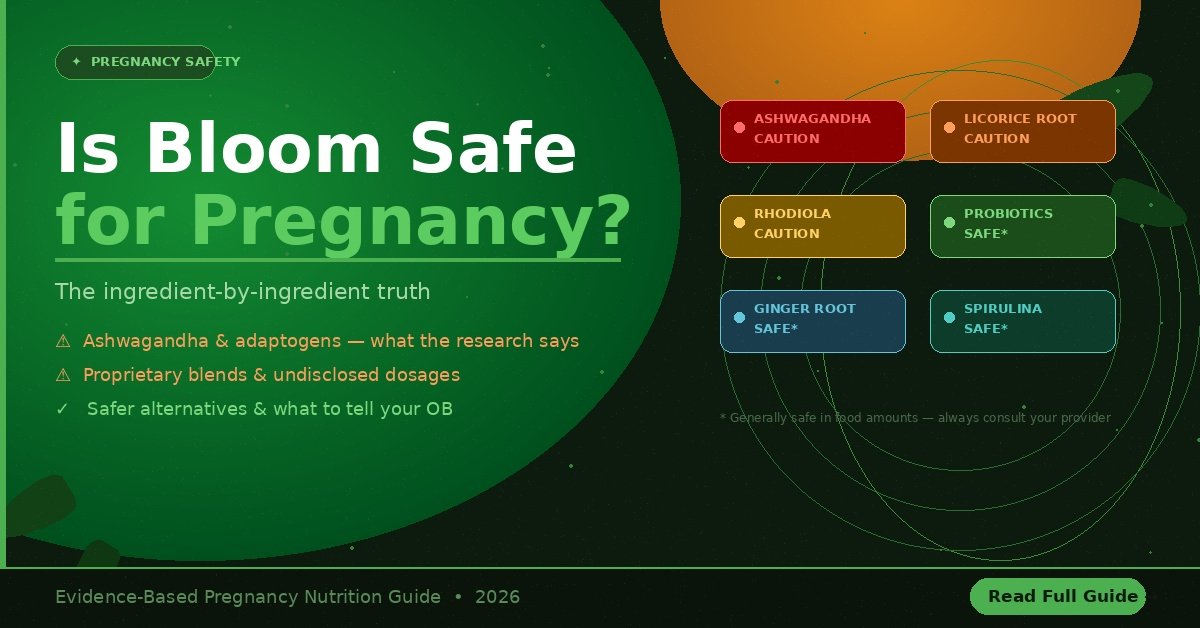
This is the section most websites bury. Bloom Greens contains an Adaptogenic Blend that includes:
- Ashwagandha root powder (Withania somnifera)
- Rhodiola root powder
- American ginseng root powder (Panax quinquefolius)
- Licorice root extract
- Astragalus root powder
- Eleuthero root powder (Siberian ginseng)
Let’s go ingredient by ingredient.
Ashwagandha
This is the most-cited concern, and for good reason. The German Federal Institute for Risk Assessment (BfR) explicitly recommends that pregnant women avoid ashwagandha supplements, citing potential abortifacient effects — meaning it may stimulate uterine contractions — in animal studies. Human studies are scarce, but the precautionary signal is strong enough that most OBs and reproductive dietitians advise against it entirely during pregnancy.
Licorice Root Extract
This one is underappreciated. Licorice root contains glycyrrhizin, a compound linked in research to reduced gestational age, lower birth weight, and — critically — effects on fetal brain development, including associations with behavioral outcomes like attention difficulties in children. Finnish research has connected high licorice intake during pregnancy to measurable neurodevelopmental differences. The dose in Bloom is unknown (proprietary blend — more on that shortly), which is exactly the problem.
Rhodiola Root Powder
Rhodiola is an adaptogenic herb with essentially no human safety data in pregnancy. Animal studies have flagged potential embryotoxic effects at higher doses. With no established safe dose for pregnant women, most practitioners take a “not enough data = avoid it” stance.
American Ginseng
Studies examining herbal ingredients found in greens powders — including ginseng — suggest potential effects on fetal brain development and a possible association with attention-related outcomes when consumed during pregnancy. It’s not the highest-priority concern in the formula, but it adds to the cumulative risk picture.
Matcha Green Tea Leaf Powder
This one’s about caffeine. Matcha contains caffeine, and the ACOG recommends staying under 200mg of caffeine daily during pregnancy. Bloom doesn’t disclose exactly how much caffeine is contributed by the matcha inclusion, which makes it hard to manage your total daily intake.
The Proprietary Blend Problem — Why This Matters More During Pregnancy
Here’s something the glowing TikTok reviews won’t tell you: Bloom Greens contains seven proprietary blends. That means the individual quantities of each ingredient are not disclosed. You can see that ashwagandha is in the adaptogenic blend. You cannot see whether you’re getting 10mg or 500mg per serving.
Why does this matter during pregnancy specifically?
Because for some of the flagged ingredients above — licorice root being the clearest example — the dose is everything. A small incidental amount may carry minimal risk. A therapeutic dose may carry real risk. Without dosage transparency, it’s impossible to assess actual exposure.
A registered dietitian nutritionist reviewing Bloom’s formula noted the proprietary blends left her “wondering about the potency of this greens powder.” That uncertainty is manageable for a healthy adult. It’s a different calculation when you’re growing a fetus.
What About Bloom’s Certifications and Testing?
Bloom states its products are manufactured in GMP-certified (Good Manufacturing Practices) facilities and claims third-party testing by ISO-accredited labs. That’s a legitimate baseline — GMP certification means the manufacturing process meets FDA standards for quality control.
However, two important limitations:
- The specific third-party testing organization is not publicly disclosed. Competing products like AG1 publish a certificate of analysis and specify NSF Certified for Sport testing, which includes screening for banned substances, heavy metals, and label accuracy. Bloom does not offer this level of documentation publicly.
- Third-party testing for quality is not the same as testing for pregnancy safety. Even a product with perfect heavy metal screening can contain herbal ingredients that are contraindicated in pregnancy.
Under the Dietary Supplement Health and Education Act (DSHEA) of 1994, supplement manufacturers don’t require FDA pre-market approval. The burden of proving a product is unsafe falls on the FDA after it’s already on shelves. This regulatory framework means that “GMP-certified and tested” is a meaningful signal of manufacturing quality — but it does not constitute a pregnancy safety endorsement.
Myth vs. Fact: Bloom Greens & Pregnancy
| Myth | Fact |
|---|---|
| “It’s all-natural, so it’s safe in pregnancy” | Natural ≠ safe. Ashwagandha and licorice root are entirely natural and still flagged as pregnancy concerns. |
| “I had it before I knew I was pregnant — now I’ve harmed my baby” | Almost certainly not. Incidental early exposure at typical supplement doses is very different from ongoing use. Talk to your OB, but don’t catastrophize. |
| “Bloom is third-party tested, so it’s pregnancy-safe” | Third-party testing covers manufacturing quality, not whether ingredients are safe during pregnancy. These are different things. |
| “The probiotics and enzymes in Bloom are the main thing anyway” | Probiotics and enzymes are the safest components. The concern is specifically the adaptogenic herbal blend. |
| “If Bloom were dangerous for pregnancy, it would say so on the label” | Supplement manufacturers are not required to test for pregnancy safety, and warning labels are largely voluntary unless a substance has been specifically restricted. |
What If You’ve Already Been Using Bloom During Pregnancy?
Take a breath. If you’ve had Bloom Greens before realizing you were pregnant — especially in early pregnancy when exposures are often minimal — the realistic risk is low. Most of the concerning ingredients are present in proprietary blends at unknown but likely small quantities. Incidental exposure is fundamentally different from deliberate daily use throughout pregnancy.
The right move: mention it to your OB or midwife at your next appointment. They can put it in context with your specific health history, current trimester, and any other supplements or medications you’re taking. You don’t need to treat it as an emergency, but you do need to have the conversation.
Going forward, the consistent guidance from reproductive dietitians and OBs is to pause Bloom Greens until after delivery and breastfeeding is complete, unless your healthcare provider specifically reviews the ingredient list and clears it.
What About Other Bloom Products?
Bloom Collagen Peptides: Collagen supplements are generally not flagged as pregnancy concerns, though research on collagen supplementation during pregnancy specifically is limited. The ingredient profile is substantially simpler than Bloom Greens. Discuss with your provider.
Bloom Pre-Workout / Energy Drinks: Avoid. Pre-workout supplements typically contain stimulants, high caffeine, and other active compounds that are not appropriate during pregnancy.
Bloom Protein Powder: Protein powders are generally lower-risk than greens powders, but you’ll want to check for artificial sweeteners, heavy metals testing, and whether any performance-enhancing additives are included.
Safer Alternatives to Bloom Greens During Pregnancy
If you want the nutritional philosophy of a greens powder during pregnancy — more fruits, vegetables, antioxidants, digestive support — here’s how to approach it more safely.
The food-first reality check: No greens powder replaces actual vegetables. Bloom’s formula, like most greens powders, doesn’t come close to meeting the daily recommended intake of fruits and vegetables in a single scoop. Whole foods deliver fiber, micronutrients, and phytonutrients in forms your body recognizes and absorbs more efficiently.
If you want a supplement option: Look for products that:
- Disclose individual ingredient quantities (not hidden in proprietary blends)
- Have no adaptogenic herbs
- Carry recognized independent certification (NSF, USP)
- Are specifically formulated and tested for pregnancy safety
Your prenatal vitamin remains the cornerstone. If you’re concerned about gaps — particularly gut health, fiber, or antioxidant intake — work with a registered dietitian who specializes in prenatal nutrition to identify targeted, evidence-based options.
A Note on How We Evaluated This
The conclusions in this article are drawn from a review of primary ingredient research, regulatory guidance from the FDA and ACOG, the German Federal Institute for Risk Assessment’s 2024 guidance on ashwagandha, peer-reviewed literature on herbal adaptogens in pregnancy, and publicly available dietitian commentary on Bloom Nutrition specifically.
The consistent view among registered dietitians and OBs who have publicly reviewed Bloom Greens is the same: the adaptogenic blend — and specifically ashwagandha, licorice root, and rhodiola — is the core concern, compounded by the lack of individual ingredient dosage transparency. These are not fringe concerns. They reflect the current evidence base and the precautionary approach that governs prenatal nutrition guidance.
Pregnancy nutrition is one of the areas where we see the widest gap between social media recommendation culture and clinical guidance. A supplement that’s perfectly reasonable for a 28-year-old athlete is a completely different calculation for that same person at 10 weeks pregnant.
FAQ: People Also Ask
Is Bloom Greens safe during the first trimester?
The first trimester is the period of most rapid fetal development and highest sensitivity to external compounds. The adaptogenic herbs in Bloom Greens — particularly ashwagandha and licorice root — are flagged as concerns at any point in pregnancy, but the first trimester warrants the most caution. Most practitioners recommend avoiding it entirely during this window.
Can I drink Bloom while breastfeeding?
The same herbal adaptogens in the formula (ashwagandha, rhodiola, licorice root, ginseng) are also flagged as concerns during breastfeeding. These compounds can transfer into breast milk and may interfere with hormone-related milk production. The standard guidance is to consult your provider and consider waiting until you’ve finished breastfeeding.
Does Bloom Greens have caffeine?
The formula contains matcha green tea leaf powder, which naturally contains caffeine. Bloom doesn’t disclose the exact caffeine quantity, which makes it difficult to account for in your total daily caffeine intake. ACOG recommends staying under 200mg per day during pregnancy. If you’re tracking caffeine closely, the undisclosed amount in Bloom is a practical problem.
What greens powder is safe during pregnancy?
The safest approach is a product with no adaptogenic herbs, fully disclosed individual ingredient quantities, an independent certification (NSF or USP), and ideally a specific formulation for pregnancy. No major greens powder brand has conducted formal pregnancy safety trials. Prenatal vitamins plus whole-food intake remains the evidence-based standard.
I accidentally took Bloom before knowing I was pregnant — is my baby okay?
Most likely yes. Incidental early exposure to supplement ingredients at typical serving sizes is very different from sustained daily use. Let your OB know at your next appointment; don’t delay or cancel the appointment because of it. They’ll be able to put the exposure in appropriate clinical context.
Is Bloom Nutrition’s prenatal vitamin different from Bloom Greens?
Yes, completely. Some brands operate under the Bloom name in different product categories. Bloom Nutrition (the TikTok-famous greens powder brand) is different from prenatal supplement products that may use similar naming. Always check the specific product, manufacturer, and ingredient list. Don’t assume a product marketed as a “prenatal” by any brand is automatically safe without reviewing its contents.
Conclusion
The short version: Bloom Greens & Superfoods is not recommended during pregnancy due to its adaptogenic herbal blend — specifically ashwagandha, licorice root extract, rhodiola, and ginseng — combined with a lack of individual ingredient dosage transparency that makes it impossible to assess actual exposure levels. This isn’t about Bloom being a bad product for non-pregnant adults. It’s about the specific risk calculus that applies when a developing fetus is involved.
If you’ve used it before knowing you were pregnant, relax and bring it up with your OB. Going forward, pause the product, lean on your prenatal vitamin, and talk to a registered dietitian if you want targeted support for gut health, energy, or nutrient gaps during pregnancy.
The supplement industry in 2026 is moving toward more transparency — better labeling, clearer third-party certifications, and more pregnancy-specific formulations. Until those standards are universal, the default position for adaptogens during pregnancy remains: when in doubt, leave it out.
Next step: Bookmark this for reference and bring the ingredient list to your next prenatal appointment. Your OB or midwife can review it against your specific health profile, trimester, and any other supplements you’re taking. That 5-minute conversation is worth more than any supplement on the market.