If you’ve ever stood in the tea aisle wondering whether to pick oolong tea vs green tea, you’re not alone. Both are praised for their health benefits, delicate flavors, and long cultural histories—but they’re not the same. In fact, the differences between oolong tea vs green tea go far beyond just taste.
From how they’re processed to how they affect your body, each tea offers a unique experience. Whether you’re a casual tea drinker or someone looking to upgrade your daily cup, understanding these differences can help you choose the one that truly suits your lifestyle.
Let’s break it down in a simple, practical way so you can finally settle the oolong tea vs green tea debate.
ALSO READ: Smoky Black Tea: A Bold Brew Worth Savoring
What Is Oolong Tea?
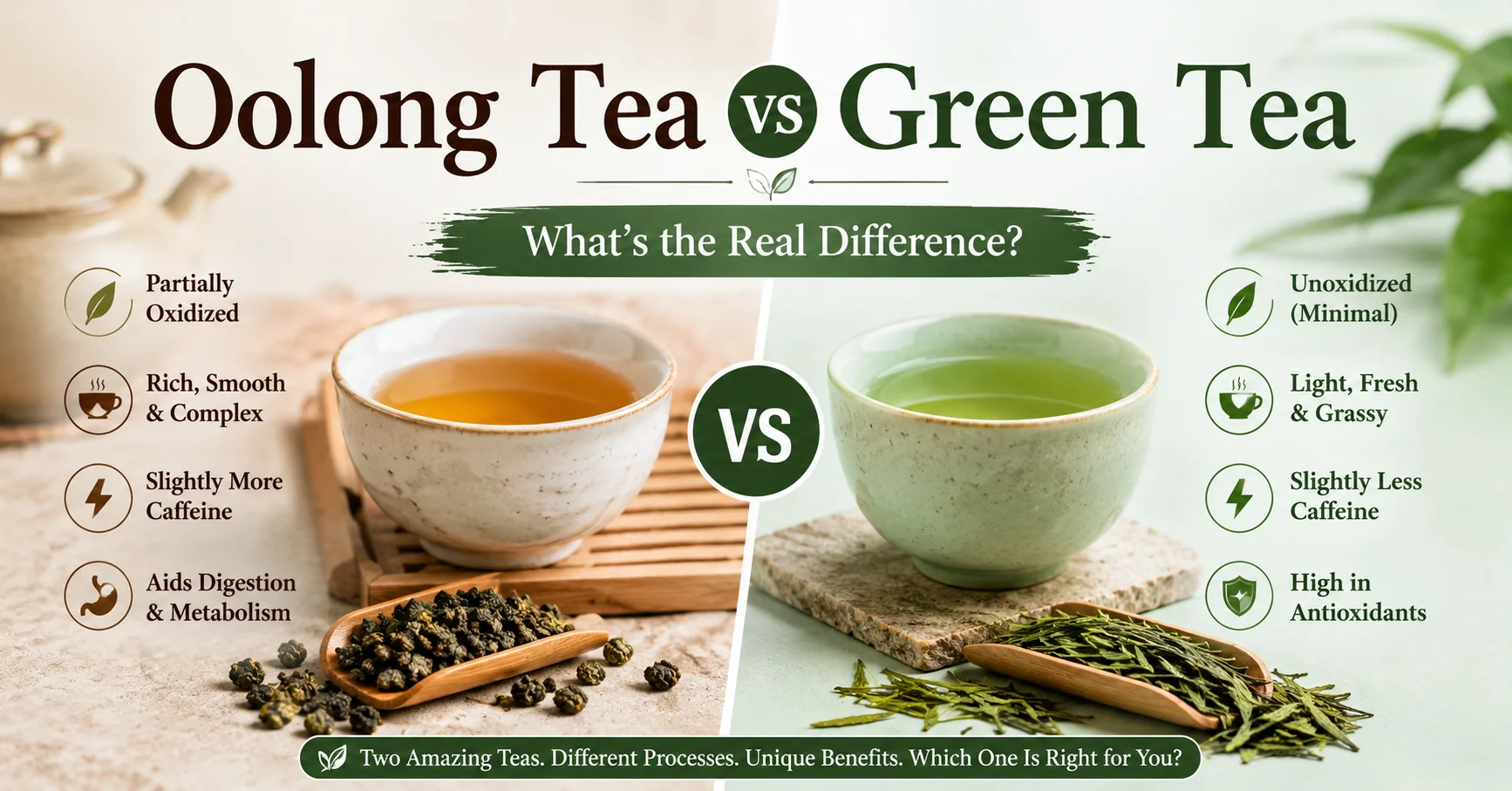
Oolong tea sits somewhere between green and black tea. It’s partially oxidized, meaning it goes through a controlled exposure to air during processing. This gives it a complex flavor profile that can range from light and floral to rich and roasted.
Unlike green tea, which is minimally processed, Oolong Tea vs Green Tea requires careful craftsmanship. The leaves are often rolled or twisted, which helps release more flavor during brewing.
Key Characteristics of Oolong Tea:
- Medium oxidation level (10% to 80%)
- Flavor ranges from sweet and floral to deep and woody
- Smooth texture with a lingering aftertaste
- Often brewed multiple times from the same leaves
What Is Green Tea?
Green tea is the least processed type of tea. The leaves are quickly heated after harvesting to prevent oxidation, preserving their natural green color and fresh flavor.
This minimal processing is what gives green tea its light, grassy taste and high antioxidant content.
Key Characteristics of Green Tea:
- Little to no oxidation
- Fresh, vegetal, slightly bitter taste
- Light body and clean finish
- High in natural compounds like catechins
Oolong Tea vs Green Tea: Processing Differences
The biggest difference between Oolong Tea vs Green Tea lies in how they are made.
Green Tea Processing:
- Leaves are harvested
- Quickly heated (steamed or pan-fired)
- Dried to preserve freshness
Oolong Tea Processing:
- Leaves are withered under the sun
- Lightly bruised to start oxidation
- Oxidation is carefully controlled
- Leaves are rolled and dried
This difference in processing directly affects everything—from flavor to caffeine content.
Flavor Comparison: Which Tastes Better?
Taste is subjective, but here’s a simple way to compare:
Green Tea Flavor:
- Light and refreshing
- Grassy or vegetal
- Sometimes slightly bitter
Oolong Tea Flavor:
- More complex and layered
- Can be fruity, floral, creamy, or roasted
- Smooth with less bitterness
If you enjoy delicate and clean flavors, green tea might be your go-to. If you prefer something richer and more aromatic, Oolong Tea vs Green Tea could be the better choice.
Caffeine Content: Which Has More Energy?
When comparing oolong tea vs green tea, caffeine levels can vary depending on how the tea is brewed, but here’s a general idea:
- Green Tea: 20–40 mg per cup
- Oolong Tea: 30–50 mg per cup
Oolong tea typically contains slightly more caffeine than green tea, making it a better option if you’re looking for a mild energy boost without switching to coffee.
Health Benefits: Oolong Tea vs Green Tea
Both teas are packed with health benefits, but they shine in slightly different ways.
Benefits of Green Tea:
- Rich in antioxidants (especially catechins)
- Supports metabolism and fat burning
- Promotes heart health
- May improve brain function
Benefits of Oolong Tea:
- Helps regulate blood sugar levels
- Supports digestion
- May aid in weight management
- Contains antioxidants that support skin health
While green tea is often associated with detox and weight loss, oolong tea is known for balancing the body and improving metabolism over time.
Weight Loss: Which Is More Effective?
This is one of the most common comparisons in the oolong tea vs green tea discussion.
Both teas can support weight loss, but in slightly different ways:
- Green tea boosts metabolism due to its high catechin content
- Oolong tea helps improve fat oxidation and digestion
Some studies suggest that oolong tea may actually burn more fat than green tea, but the difference is not dramatic. The key is consistency—drinking either tea regularly can support a healthy lifestyle.
Brewing Differences: How To Get The Best Flavor
The way you brew your tea can make or break the experience.
Green Tea Brewing Tips:
- Water temperature: 70–80°C
- Steep time: 1–3 minutes
- Avoid over-steeping to prevent bitterness
Oolong Tea Brewing Tips:
- Water temperature: 80–95°C
- Steep time: 3–5 minutes
- Leaves can be reused multiple times
Oolong tea is more forgiving when it comes to brewing, while green tea requires a bit more precision.
Appearance: Leaves And Liquor
Even visually, these teas are quite different.
Green Tea:
- Leaves: Flat or slightly curled, bright green
- Liquor: Pale green or yellow
Oolong Tea:
- Leaves: Rolled into tight balls or twisted strips
- Liquor: Golden to amber
The visual difference reflects their level of oxidation and processing.
Which One Should You Choose?
Choosing between oolong tea vs green tea depends on your personal preferences and goals.
Choose Green Tea If:
- You prefer a light, refreshing drink
- You want high antioxidant content
- You’re sensitive to caffeine
Choose Oolong Tea If:
- You enjoy richer, more complex flavors
- You want a slightly stronger energy boost
- You like experimenting with multiple infusions
There’s no Better option—just the one that fits your taste and lifestyle.
Can You Drink Both?
Absolutely. In fact, many tea drinkers rotate between the two.
You might start your day with green tea for a gentle boost, and switch to oolong tea in the afternoon for a more satisfying, aromatic experience.
This way, you get the benefits of both without getting bored.
Conclusion
When it comes to oolong tea vs green tea, the real difference lies in processing, flavor, and overall experience. Green tea is light, fresh, and packed with antioxidants, while oolong tea offers a richer, more complex profile with slightly higher caffeine.
Both teas are excellent choices for health and enjoyment. Instead of picking one over the other, consider exploring both and finding what suits your mood, taste, and daily routine.
At the end of the day, the best tea is the one you actually enjoy drinking.
FAQs
What is the main difference between oolong tea and green tea?
The main difference is oxidation. Green tea is not oxidized, while oolong tea is partially oxidized, giving it a more complex flavor.
Is oolong tea healthier than green tea?
Both are healthy. Green tea has more antioxidants, while oolong tea supports digestion and metabolism.
Can I drink oolong tea every day?
Yes, drinking oolong tea daily is generally safe and can provide several health benefits when consumed in moderation.
Which tea is better for beginners?
Green tea is often easier for beginners due to its simple flavor, but oolong tea is great if you enjoy exploring richer tastes.
Does oolong tea taste like green tea?
Not exactly. Oolong tea has a more complex and layered flavor, while green tea is lighter and more vegetal.
ALSO READ: Steepware Essentials: Upgrade Your Tea Ritual

I’m an author and journalist specializing in food and cooking. Caffeine Basics is my ninth book. I’ve written about the U.S. wine industry, international foods, shrinking your “cookprint,” and cooking with kids. Great Bar Food at Home was a James Beard Award finalist, and Cooking Green: Reducing Your Carbon Footprint in the Kitchen won a Green Book Award. Publishers include John Wiley & Sons, ClarksonPotter, Macmillan and others.