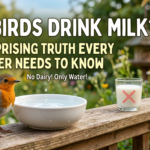
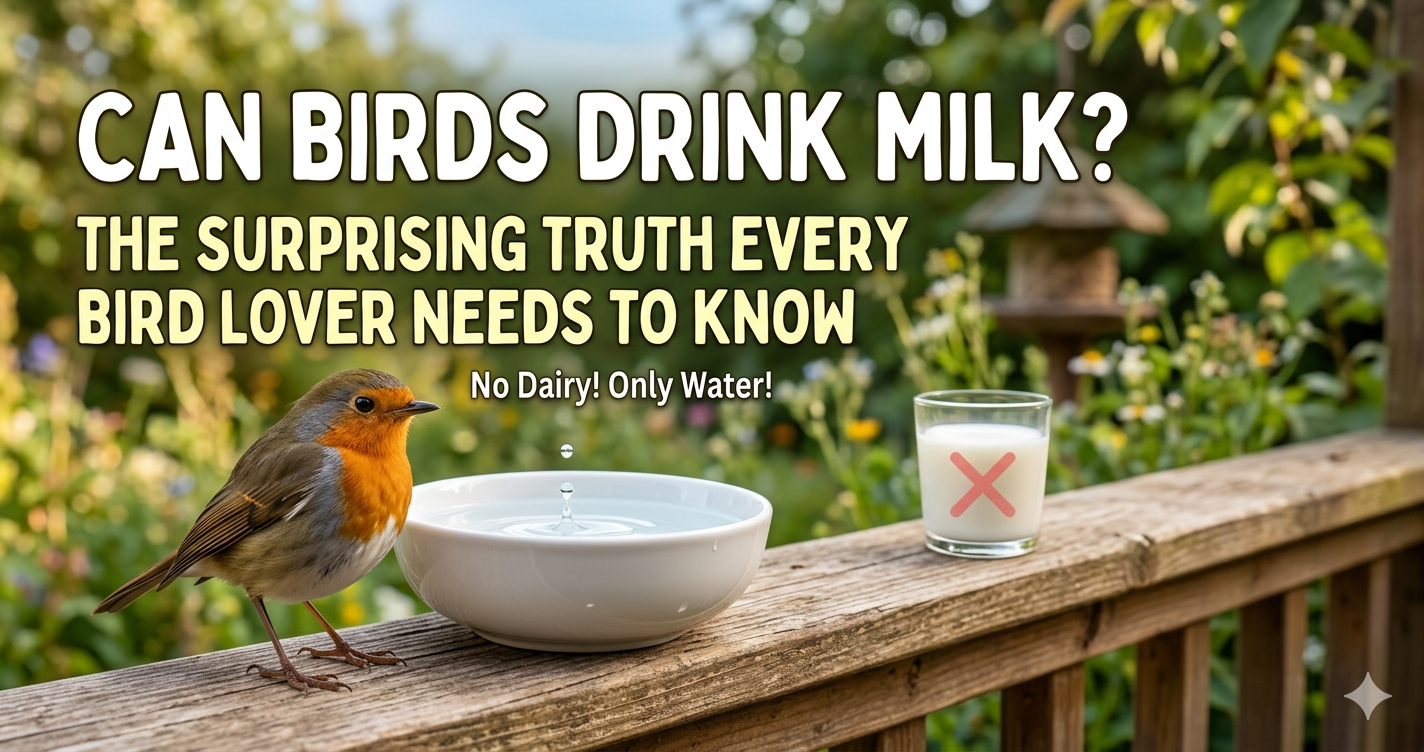
A few years ago, I was sitting on my porch with a chilled glass of milk when a fledgling robin landed on the railing. My first instinct—the one fueled by cartoons and old wives’ tales—was to wonder if he’d like a sip. We give kittens milk, right? Why not a thirsty bird?
It’s a question I’ve heard hundreds of times throughout my decade of working with avian rescues and consulting for backyard birders. The answer to can birds drink milk is a resounding “No,” but the why behind that answer is where things get interesting. In the world of ornithology, feeding a bird dairy isn’t just a minor “oops”—it’s a recipe for serious health issues.
In this guide, we’re going to dive deep into the biology of birds, why milk acts more like a toxin than a treat, and what you should actually provide to keep our feathered friends thriving.
The Biological Reality: Why Birds and Dairy Don’t Mix
To understand why birds can’t drink milk, we have to look at the evolutionary timeline. Mammals and birds took very different paths millions of years ago. Mammals evolved mammary glands to produce milk, and in turn, mammalian infants evolved the ability to produce lactase, the enzyme required to break down lactose (milk sugar).
Birds, on the other hand, have never had a biological need for lactase. They transition straight from an egg yolk to insects, seeds, or nectar. Because their digestive tracts lack this specific enzyme, lactose passes through their system completely undigested.
Think of it like trying to run a diesel engine on vegetable oil without a conversion kit. The “fuel” is there, but the machinery doesn’t know how to process it. When a bird consumes milk, the lactose sits in the gut, fermenting and attracting bacteria. This leads to a condition called osmotic diarrhea, which is often fatal for small birds because it causes rapid, severe dehydration.
Expert Note: While some larger birds might survive a tiny accidental peck at a spilled latte, their bodies are still under immense stress trying to clear the “sludge” from their system.
The Hazards and Use Cases (Or Lack Thereof)
When discussing whether birds can drink milk, it’s important to address the “why” behind the question. Most people ask because they want to help a weak bird or find a way to supplement a baby bird’s diet. However, there are virtually zero scenarios where cow’s milk is beneficial for a bird.
The Myth of the “Bread and Milk” Mash
In the past, people often suggested soaking bread in milk to feed orphaned birds. This is one of the most dangerous pieces of “advice” still circulating. Not only is the milk toxic to their gut, but the bread provides empty calories with no protein, leading to “Angel Wing”—a permanent deformity where the wings twist outward, rendering the bird flightless.
Who Should Avoid Giving Birds Milk?
- Backyard Birders: Never put milk in birdbaths or feeders.
- Rescue Beginners: If you find a grounded bird, do not offer milk as hydration.
- Pet Owners: Even if your parrot seems curious about your cereal bowl, keep it away.
The only “use case” for milk-related products in the avian world is highly specific: some rehabilitators use tiny amounts of fermented dairy (like specific live-culture yogurts) to restore gut flora in sick birds. But this is done with pharmaceutical precision and should never be attempted by a hobbyist.
What to Give Instead: A Step-by-Step Hydration Guide
If you see a bird that looks thirsty or distressed, your heart is in the right place. But instead of reaching for the gallon of 2%, follow this professional protocol to safely hydrate a bird.
Step 1: Provide Clean, Fresh Water
Water is the only liquid a bird needs. For backyard birds, a shallow birdbath (no more than 2 inches deep) with a rough bottom for grip is ideal. Change the water daily to prevent the spread of Avian Flu and West Nile Virus.
Step 2: Use an Electrolyte Solution (For Emergencies)
If you have a rescued bird that is severely dehydrated, skip the milk and reach for unflavored Pedialyte or a homemade saline solution.
- Recipe: 1 cup warm water, a tiny pinch of salt, and a tiny pinch of sugar.
- How to offer: Use a Q-tip or a small dropper to place a single drop on the side of the beak. Never force liquid down a bird’s throat, as they have a hole at the base of their tongue (the glottis) that leads directly to their lungs. You could drown them instantly.
Step 3: High-Moisture Foods
For many birds, hydration comes from their food. If you want to help, offer:
- Water-soaked mealworms
- Slices of watermelon or berries
- Soaked high-quality kitten kibble (for starlings or jays)
Comparison: Milk vs. Safe Alternatives
| Liquid/Food | Bird Safety | Why? |
| Cow’s Milk | Toxic | No lactase; causes fatal diarrhea. |
| Almond/Soy Milk | Avoid | Often contains thickeners and sugars birds can’t process. |
| Plain Water | Optimal | Exactly what they evolved to drink. |
| Unflavored Pedialyte | Safe (Rescue Only) | Replaces lost electrolytes without lactose. |
| Berry Juice | Moderate | Only in very small amounts for specific species; high sugar. |
Common Mistakes and How to Fix Them
Even the most well-intentioned bird lovers make mistakes. Here are the top three I’ve seen in the field:
1. Thinking “Organic” or “Lactose-Free” Milk is Safe
I’ve had clients ask if lactose-free milk is okay since the “problem” is gone. While it’s less dangerous, milk is still high in fats and proteins that are not bioavailable to birds.
- The Fix: Stick to water. If it didn’t come from a rain cloud or a stream, a bird probably shouldn’t be drinking it.
2. Giving Milk to “Strengthen” a Sick Bird
People often equate milk with strength. In a bird, the energy required to try and digest milk actually depletes their remaining reserves.
- The Fix: Provide warmth (a heating pad on low under a box) and quiet. Stress kills birds faster than hunger.
3. Leaving Dairy-Based Scraps Out
Pizza crusts with cheese or buttered toast might be snatched up by crows or gulls. While these birds are the “garbage disposals” of the avian world, dairy still causes them distress.
- The Fix: If you feed birds scraps, ensure they are “naked”—no butter, no cheese, no milk.
Conclusion
So, can birds drink milk? Definitely not. While it might seem like a harmless treat, the biological reality is that birds are strictly lactose intolerant. Giving a bird milk is essentially giving them a digestive crisis that their small bodies aren’t equipped to handle.
If you want to be a hero to your local feathered residents, keep the milk for your coffee and provide a clean, shallow dish of fresh water instead. Your birds will be healthier, more energetic, and far more likely to keep visiting your garden for years to come.
Frequently Asked Questions
1. Can birds drink milk if it’s diluted with water?
No. Even diluted milk contains lactose. There is no “safe” level of dairy for a bird’s digestive system.
2. What happens if a bird accidentally drinks milk?
The bird will likely experience bloating, gas, and severe diarrhea. For a small songbird, this can lead to dehydration and death within hours.
3. Can baby birds drink milk?
Absolutely not. Baby birds need specialized proteins from insects or a professional-grade “nestling formula” (like Kaytee Exact). Milk will kill a baby bird very quickly.
4. Are there any birds that can digest milk?
Technically, no. However, some birds like pigeons and flamingos produce “crop milk,” which is a fatty secretion from their own bodies. It is not “milk” in the dairy sense and contains no lactose.
5. Can I give birds yogurt or cheese?
Some experts use tiny amounts of hard cheese or live-culture yogurt because the fermentation process breaks down much of the lactose. However, for the average birder, it is much safer to avoid dairy entirely.
6. Can birds drink almond milk or oat milk?
It’s best to avoid them. Many plant-based milks contain additives, salts, and sweeteners that are not natural for a bird’s diet. Stick to plain water.