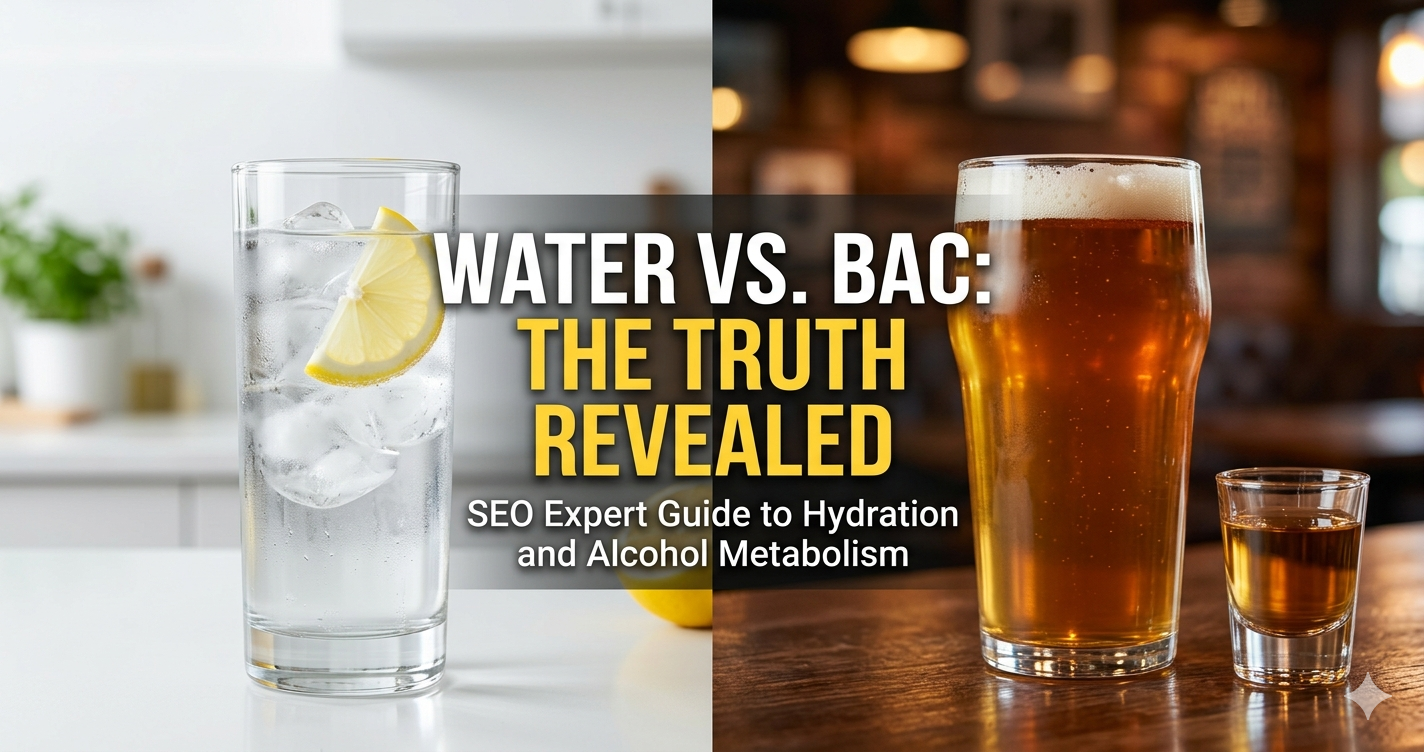
It’s a scene I’ve witnessed (and lived) a hundred times. You’re at a wedding or a Friday night happy hour, and someone leans over to a friend who’s had one too many and says, “Hey, chug this glass of water—it’ll help you sober up and lower your BAC.” It sounds like solid logic, right? If you dilute a solution, the concentration goes down. But when it comes to human biology and the way our livers process alcohol, the “dilution solution” isn’t quite as straightforward as we’d like to believe. As someone who has spent a decade navigating the science of wellness and lifestyle optimization, I’ve seen this myth persist despite mountains of evidence to the contrary.
Today, we’re going to settle the score on whether does drinking water lower BAC (Blood Alcohol Content) and explore what actually happens inside your body when you mix H2O with spirits. You’ll learn the difference between feeling better and actually being sober, the mechanics of alcohol metabolism, and the real-world strategies that actually work for responsible drinking.
Understanding BAC: The Science of What’s in Your Veins
To answer the question does drinking water lower BAC, we first have to understand what BAC actually is. Blood Alcohol Content is a measurement of the percentage of alcohol (ethanol) in your bloodstream. For example, a BAC of 0.08% means there are 0.08 grams of alcohol for every 100 milliliters of blood.
Think of your bloodstream like a highway and the alcohol molecules like cars. Your BAC is the density of traffic. When you drink water, you aren’t removing cars from the highway; you’re essentially just adding more “shoulder space” or lanes (fluid volume). However, the legal and physiological measurement of BAC is remarkably stubborn.
The Liver: The Sole Gatekeeper
The most important thing to realize is that your liver is a “fixed-rate” machine. It’s like a narrow tunnel that only allows a certain number of “alcohol cars” to pass through per hour. On average, the human liver can process about one standard drink per hour. No amount of water, coffee, cold showers, or bread can force that tunnel to expand or make the cars move faster.
The Dilution Myth
People often assume that drinking a gallon of water will “thin out” the alcohol. While staying hydrated increases your total body water, it doesn’t change the rate at which your liver metabolizes the ethanol already circulating in your system. In simple terms: Water does not lower your BAC. It only changes how you feel while your body does the hard work of detoxification.
The Benefits of Hydration (Even if it Doesn’t Lower BAC)
If water doesn’t lower your BAC, why does every doctor, bartender, and “responsible” friend insist on it? Because while water won’t get you legally sober faster, it is your absolute best defense against the collateral damage of alcohol.
1. Fighting Dehydration
Alcohol is a diuretic. It inhibits the antidiuretic hormone (ADH), which tells your kidneys to hold onto water. This is why you head to the bathroom every twenty minutes after a few pints. By drinking water, you are replacing the fluids you’re losing. This prevents the “shriveled brain” feeling—that literal pulling on the membranes of your brain that causes a pounding headache the next morning.
2. Pacing and Volume
One of the most practical benefits of the “one-for-one” rule (one glass of water for every alcoholic drink) is purely mechanical. If you are drinking water, you are physically unable to drink alcohol as quickly. It slows down your consumption rate, giving your liver a fighting chance to keep up with the intake. This prevents your BAC from rising as high in the first place, even if it doesn’t lower it once the alcohol is already in your system.
3. Mitigating the Hangover
Most of what we call a “hangover” is a cocktail of dehydration, electrolyte imbalance, and inflammation. While water won’t help you pass a breathalyzer test any sooner, it will significantly reduce the severity of the “Day After.” You’re essentially cushioning the landing.
The Real-World Guide to Managing Your BAC
Since we’ve established that chugging water won’t magically drop your BAC from a 0.10 to a 0.05, what should you actually do? Based on years of researching metabolic health and observing human behavior, here is the most effective step-by-step process for managing your alcohol levels.
Step 1: The Pre-Game Meal
Never drink on an empty stomach. Food—specifically proteins and healthy fats—slows the absorption of alcohol into the small intestine. This doesn’t “absorb” the alcohol like a sponge; rather, it keeps the alcohol in your stomach longer, where it is broken down more slowly before entering the bloodstream.
Step 2: The 1:1 Ratio
For every 12oz beer, 5oz glass of wine, or 1.5oz shot, drink 8oz of plain water. This is the “Gold Standard” of responsible drinking. It keeps your hydration levels stable and naturally caps your alcohol intake.
Step 3: Understand Your Body Composition
BAC is affected by weight, biological sex, and body fat percentage. Alcohol is water-soluble, not fat-soluble. This means if two people weigh 200 lbs, but one has more muscle (which holds more water) and the other has more body fat, the person with more muscle will likely have a slightly lower BAC after the same number of drinks. Knowing your personal limits is better than any “hack.”
Step 4: The Time Factor
The only thing that lowers BAC is time. If your BAC is 0.08, it will take approximately 5 to 6 hours for that alcohol to completely leave your system. Plan your transportation and your sleep schedule around this biological reality.
Tools and Methods: What Works vs. What’s a Waste
In the quest to “sober up fast,” people try all sorts of gadgets and supplements. Let’s look at what actually provides value.
| Method/Tool | Does it Lower BAC? | Is it Worth It? |
| Water | No | Yes (For hydration/hangover) |
| Personal Breathalyzers | No | Yes (For awareness/safety) |
| IV Hydration Therapy | No | Maybe (Expensive, but helps recovery) |
| Black Coffee | No | No (Creates a “wide-awake drunk” effect) |
| Hangover Pills | No | Mostly No (Usually just B-vitamins) |
Expert Recommendation: The Personal Breathalyzer
If you are serious about understanding how alcohol affects you, buy a high-quality fuel-cell breathalyzer. Using one of these in a safe, non-driving environment can be an eye-opening experience. You’ll see that even after you feel “fine” or “sober,” your BAC might still be well above the legal limit. It’s the ultimate tool for objective truth.
Common Mistakes: What NOT To Do
Throughout my career, I’ve seen people make dangerous assumptions about alcohol. Here are the most frequent errors:
- The “Sweat it Out” Fallacy: People think going to a sauna or for a run will “sweat out” the alcohol. In reality, less than 1% of alcohol is excreted through sweat. You’re actually just increasing your risk of severe dehydration and heatstroke.
- Mixing with Energy Drinks: Caffeine masks the sedative effects of alcohol. You feel sober because you’re wired, but your BAC remains just as high. This leads to “high-intensity” bad decisions.
- The “Cold Shower” Myth: Much like coffee, a cold shower provides a sensory shock that makes you more alert. It does zero to help your liver process ethanol.
- Trusting “Old Wives’ Tales”: Eating charcoal, taking aspirin before drinking, or drinking olive oil are mostly myths that can actually irritate your stomach lining further.
Conclusion: Respect the Biology
So, does drinking water lower BAC? The short, scientific answer is no. You cannot dilute your way to sobriety. Your liver operates on its own clock, and no amount of H2O can turn back the hands of time.
However, water is still your most loyal ally when you choose to consume alcohol. It prevents the debilitating effects of dehydration, slows your pace, and ensures that you wake up feeling like a human being rather than a shell of one.
The best strategy is always moderation and preparation. Eat a solid meal, keep the water flowing, and most importantly, never rely on “hacks” when it comes to your safety or the safety of others on the road. If you’ve been drinking, the only tool that truly works is a pillow and a long night’s sleep.
Have you ever tried a “miracle” hangover cure that actually worked, or do you swear by the 1:1 water rule? Drop a comment below and share your experience!
FAQs
1. Does drinking water help you pass a breathalyzer?
No. Breathalyzers measure the alcohol vapor in your alveolar air (from your lungs), which is in equilibrium with your BAC. Drinking water does not change the concentration of alcohol in your blood or lungs.
2. Can I flush alcohol out of my system with water?
You cannot “flush” alcohol out. While water helps the kidneys remove other toxins, the liver is responsible for 90% of alcohol metabolism, and it cannot be rushed by increased fluid intake.
3. How much water should I drink while drinking alcohol?
A good rule of thumb is 8 ounces of water for every standard alcoholic drink. This helps maintain hydration and naturally slows your drinking pace.
4. Why do I feel more sober after drinking water?
Water can reduce symptoms of dehydration like dizziness and headaches, which makes you feel more alert. However, your coordination, reaction time, and BAC remain impaired.
5. Does drinking water before bed help?
Yes, but not for your BAC. Drinking a large glass of water before bed helps rehydrate your body overnight, which can significantly reduce the severity of a hangover the next morning.
6. Will drinking water lower my BAC if I have a high metabolism?
No. While a higher metabolism might process alcohol slightly faster than a slow one, water intake is not the variable that changes that metabolic rate. Your liver’s enzyme production is the deciding factor.