
More than 63 plants contain caffeine naturally. Coffee, tea, and cacao are the ones we most favor. Before discovering brewing, humans ate the leaves of coffee and tea, sometimes mixed with fat and carried like biscuits on long journeys.
Humans also eat a few other caffeinated plants, mostly ones locally available to them, and these include:
- Yaupon holly, or cassina, in North America
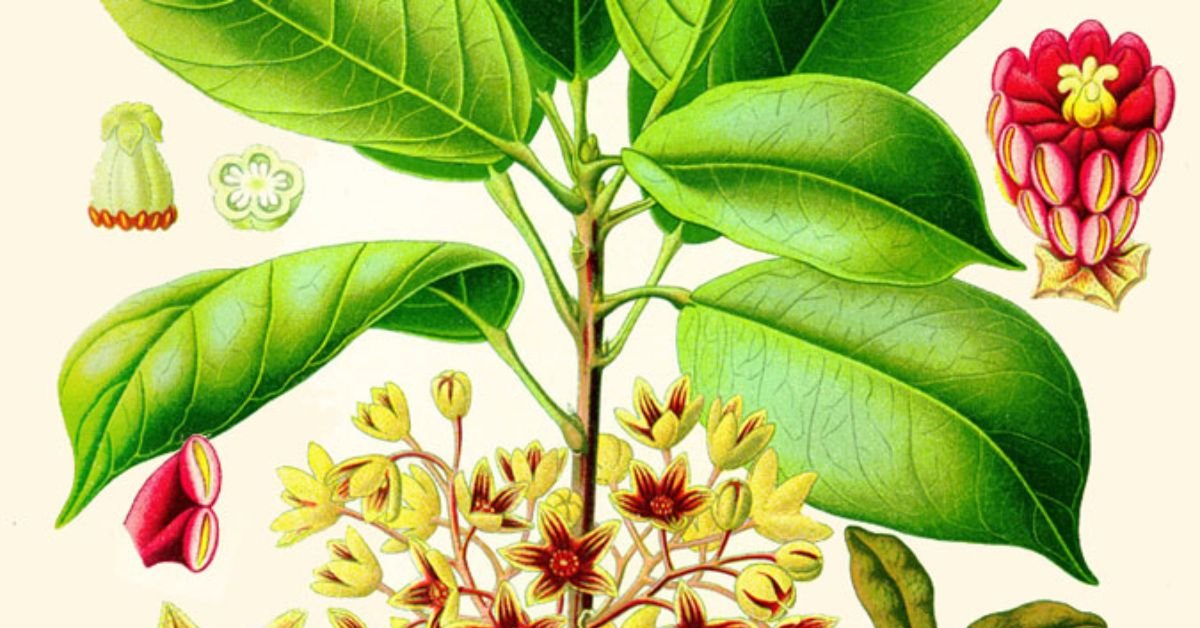
- Cola nut of West Africa (also spelled kola; plant pictured above)
- Yoco plant (the bark) of South America
Evidence of yaupon holly as a pre-Colombian, caffeinated beverage has been found as far north as Illinois, dating to as early as 1250 AD, and some people in South Carolina, as well as South America, still consume it.
Caffeine Basics: Table of Contents

I’m an author and journalist specializing in food and cooking. Caffeine Basics is my ninth book. I’ve written about the U.S. wine industry, international foods, shrinking your “cookprint,” and cooking with kids. Great Bar Food at Home was a James Beard Award finalist, and Cooking Green: Reducing Your Carbon Footprint in the Kitchen won a Green Book Award. Publishers include John Wiley & Sons, ClarksonPotter, Macmillan and others.